The first time we took Maple on a long trip, I packed a plastic bowl, a jug of water, and a prayer. The jug rolled around the floorboards. The bowl tipped over twice before we hit the interstate. And every time I handed water back to her, I had to ask Ron to pull over, unclip her harness, and hope she drank before we had to move again. By the time we reached the cabin, she was thirsty, I was frazzled, and the back seat looked like a dog park had flooded. That trip taught me the rule I now repeat to every friend who travels with a dog: the water has to come to the dog, not the other way around. The Tuff Pupper PupFlask is the tool that finally made that work.
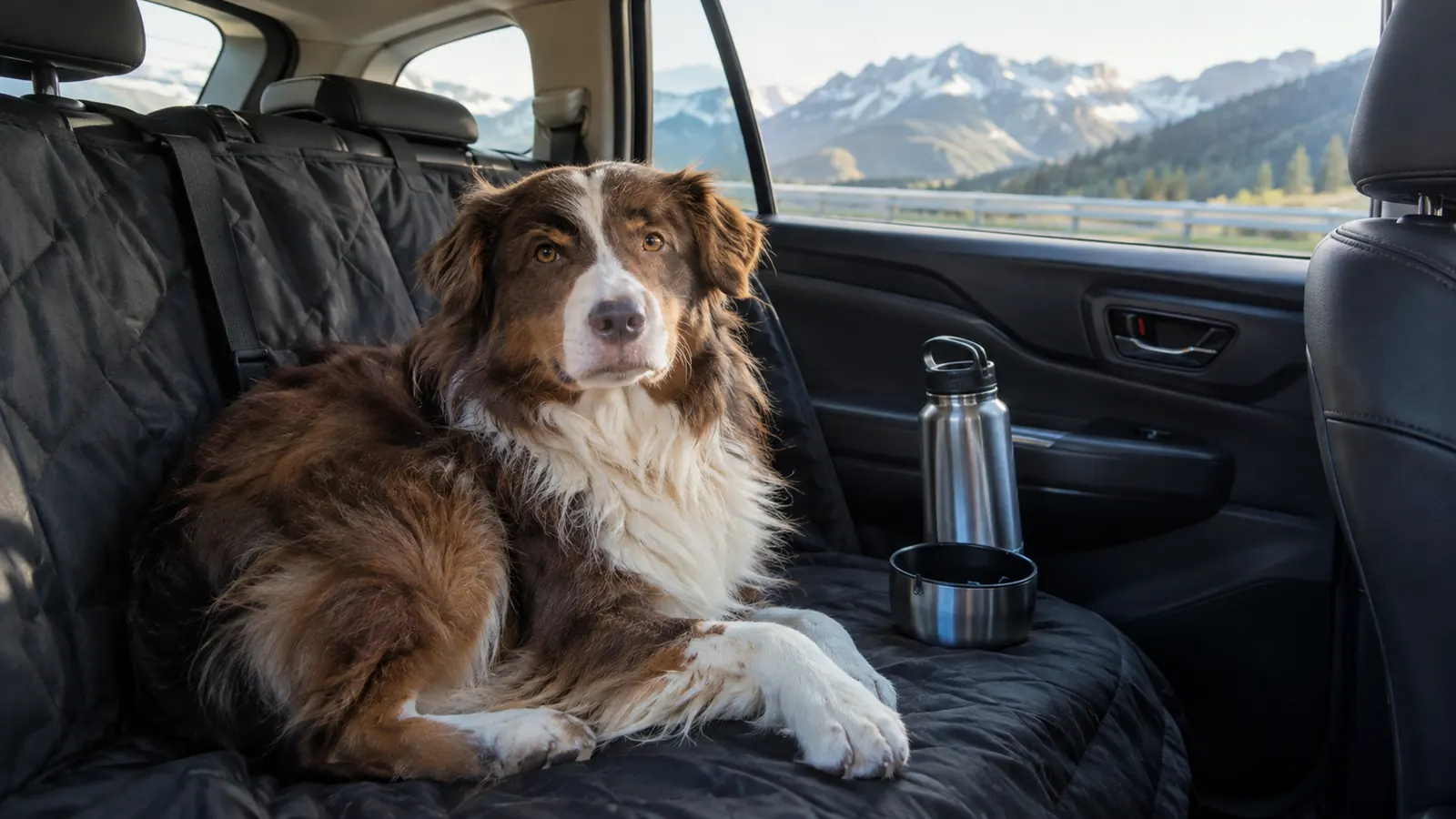
Maple is a 6-year-old Australian Shepherd mix, about 45 pounds, and she rides in the back seat of our Subaru Outback. Ron and I spend about four months a year on the road, mostly national parks, lake towns, and pet-friendly motels. We have learned the hard way that a dog who is not drinking on a trip is a dog who is one step away from a problem. Dehydration in dogs is not dramatic at first. It is a dry nose, a droopy walk, a dog who turns down dinner at the motel. By the time it is obvious, you are already behind. So here is the routine we have settled into, step by step, with the gear that actually survived a summer of testing.
The Bottle That Ended Our Spilled-Bowl Era
The Tuff Pupper PupFlask is a stainless steel bottle with a bowl built into the lid. You press the button, water fills the bowl, your dog drinks, and whatever is left drains back into the bottle. No jug rolling around, no bowl flipping over, no stopping the car to pour. It is the one piece of travel gear I recommend before the fancy bed and the seat cover.
Amazon Check Today's Price on Amazon →Step 1: Start the Trip Hydrated, Not Stuffed
The night before we leave, I do not change Maple's routine. She gets her normal dinner, her normal walk, and her normal water bowl. What I do change is the timing. I pick up her water bowl about an hour before we load the car, the same way I would for a child on a long car ride. That gives her time to do her business before we leave, which means fewer emergency stops in the first hour.
I also give her a good drink right before we get in the car, then a short walk around the block. A dog who starts a trip with a full bladder and a full stomach is a dog who will be miserable by mile fifty. A dog who starts with a comfortable drink and an empty-ish bladder is a dog who can settle into the ride. This is not complicated, but it is the step most people skip, and it is the reason the first hour of so many road trips is chaos.
One more thing I learned the slow way: do not let her drink a huge amount right before the car starts moving. A sloshing stomach on a winding road is a recipe for carsickness. The goal is hydrated, not waterlogged. If we are heading into a hot stretch, I will offer her a few sips from the PupFlask right before we pull out, but I never let her tank up.
Step 2: Offer Water at Every Stop, Whether She Asks or Not
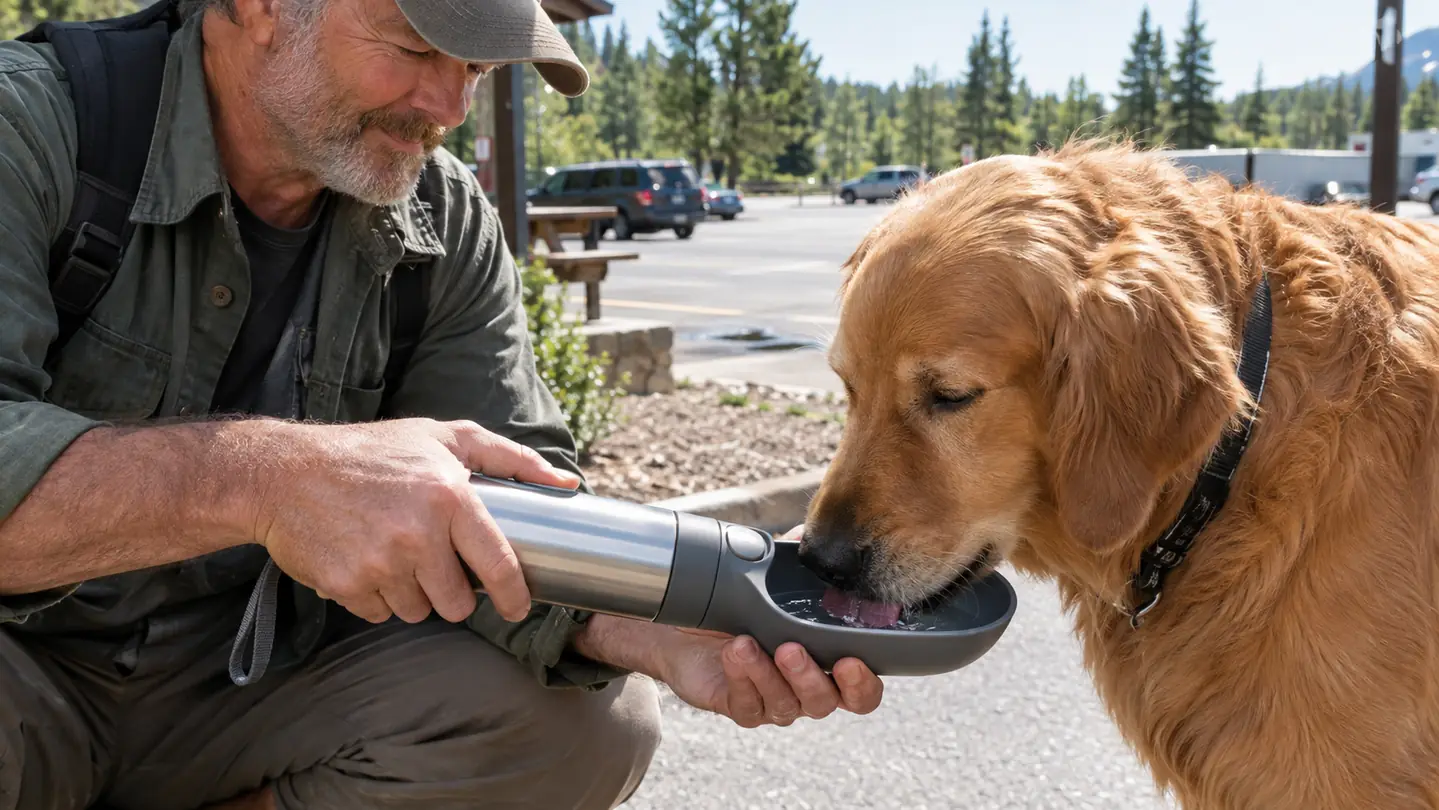
Dogs do not always ask for water when they need it. Maple gets excited at rest areas, sniffs every post, watches every other dog, and completely forgets that she is thirsty. If I waited for her to look at me with pleading eyes, she would go hours without a drink on a hot day. So I made a rule: every time we stop, I offer water. Not because she looks thirsty, but because stopping is the easiest time to get her to drink.
This is where the PupFlask earns its place in the car. I keep it in the door pocket, within reach of the back seat. When we stop, I unscrew the lid, press the button, and the bowl fills while Maple watches. She drinks, I press again to drain the rest back into the bottle, and we are back on the road in under two minutes. No pouring, no spilling, no wrestling with a separate bowl while holding a leash.
The stainless steel matters more than I expected. On a hot day, water in a plastic bottle tastes warm and flat by lunchtime. The PupFlask keeps the water noticeably cooler, and Maple drinks more when the water is cool. I cannot prove the temperature is the reason, but I can prove that she drinks more from this bottle than she ever did from the plastic jug. That alone was worth the switch.
Step 3: Use the One-Button Bowl So You Are Not Fumbling at the Side of the Road
The first bottle I tried on a trip had a separate bowl that clipped to the side. It worked fine in the kitchen. On the side of a highway, with a dog pulling on the leash and a semi truck roaring past, it was a disaster. I needed three hands and a flat surface, and the bowl kept popping off the clip. I gave up on it somewhere in Virginia and bought the PupFlask at the next town.
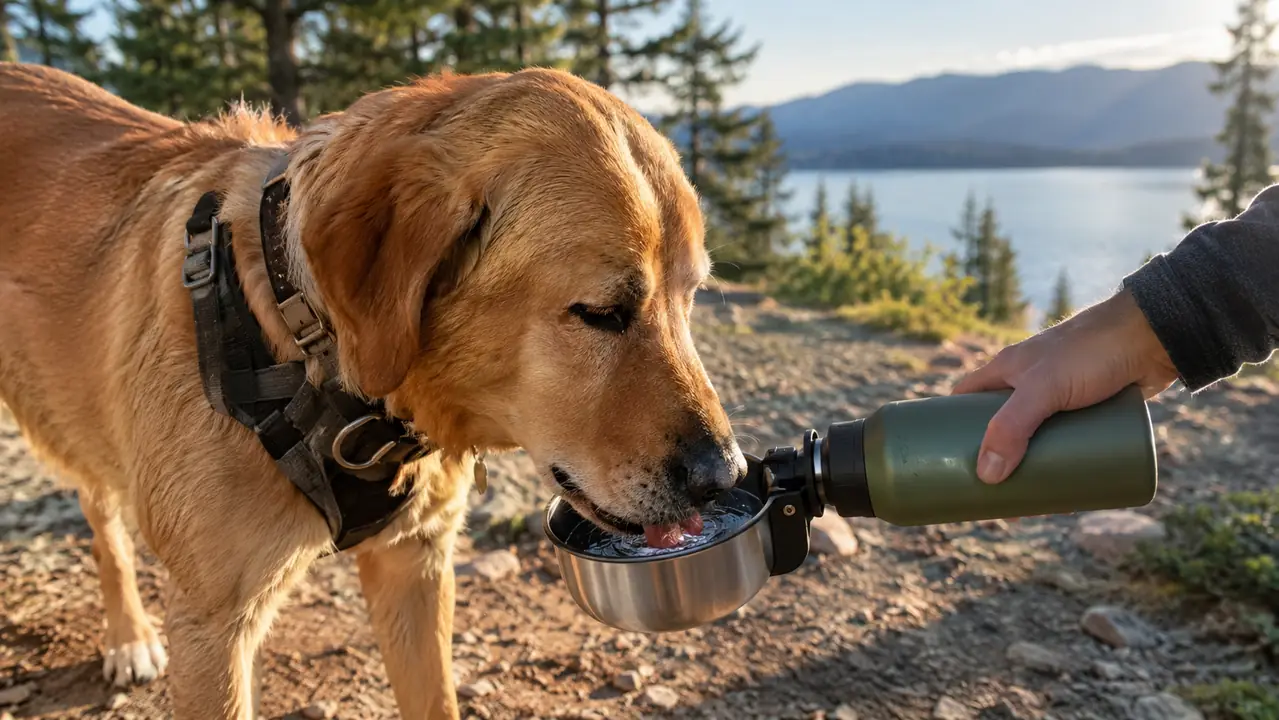
The difference is the built-in bowl. You press the button on the lid, the bowl fills, the dog drinks, and the leftover water drains back into the bottle when you release the button. There is no separate piece to lose, no clip to break, no balancing act. I can hold the leash in one hand and the bottle in the other, and Maple can drink without me putting anything down on a dirty rest stop floor.
The one-hand operation sounds like a small thing until you are standing in a gravel lot with a dog who has spotted a squirrel. Then it is the difference between a calm two-minute stop and a ten-minute wrestling match. I have used this bottle at rest areas, trailheads, motel parking lots, and once on the tailgate of the Outback in a rainstorm. It has never spilled on me, and it has never left Maple standing there waiting while I fumbled.
Step 4: Watch the Signs, Not the Clock
There is no perfect schedule for how often a dog should drink on a road trip. It depends on the temperature, the length of the drive, and the dog. What I watch instead is Maple's behavior. If she is panting hard, licking her lips, or looking at the PupFlask when I reach for it, she is thirsty. If she turns her head away from the bowl, she is not, and I do not push it.
The signs of dehydration are the ones I learned to catch early. A dry nose, tacky gums, a loss of skin elasticity, or a dog who seems unusually tired on a short walk. On a trip, I also watch how much she drinks at the end of the day. A dog who drinks normally at dinner is a dog who is probably fine. A dog who ignores her water bowl at the motel after a hot day in the car is a dog I need to watch.
I will be honest about the limits of my system. I am a retired librarian, not a veterinarian. If Maple ever showed real signs of dehydration, I would not mess around with a water bottle. I would find a vet. But for the normal wear and tear of a long drive, the routine of offering water at every stop, watching her behavior, and keeping the water cool has kept her healthy and happy through thousands of miles.
Step 5: Make the Bottle Part of the Car, Not Part of the Luggage
The gear that works on a trip is the gear you can reach without unbuckling your seatbelt. The PupFlask lives in the door pocket of the Outback, right next to Maple's leash. It does not live in the trunk. It does not live in the duffel bag. It lives where I can grab it with one hand while the car is running, because that is the only way I will actually use it at every stop.
The same goes for the rest of the hydration kit. I keep a spare bottle of water in the car for refills, because the PupFlask holds about 24 ounces and a long day on the road will empty it. I keep a small towel in the door pocket for wet chins and wet paws. And I keep a collapsible bowl in the glove box for the rare times Maple wants to drink from something wider than the built-in bowl. The bottle does the daily work; the backup gear covers the edge cases.
At the end of each day, I rinse the PupFlask with hot water and leave it to dry on the motel counter. It takes about a minute. The stainless steel does not hold odors the way plastic does, which matters when you are on week three of a trip and the bottle has been in a hot car all day. A clean bottle is a bottle Maple will actually drink from, and a bottle she will drink from is a bottle that keeps her safe.
What Else Helps
The PupFlask is the centerpiece of our road-trip hydration system, but it is not the whole system. A few other things have earned permanent spots in the car. A seat cover protects the upholstery and gives Maple a non-slip surface to stand on, which makes her less anxious on winding roads. A crash-tested harness keeps her safe and gives me something to clip the leash to at rest stops. And a small first-aid kit with electrolyte powder for dogs has bailed us out more than once on hot days.
I also learned to plan the route around the dog. We stop every two to three hours, not because Maple needs the bathroom that often, but because a break in the routine keeps her from getting restless. At each stop, she gets water, a short walk, and a chance to sniff something new. The walk does as much for her attitude as the water does for her body. A dog who has stretched her legs is a dog who will settle back into the back seat and sleep until the next stop.
The PupFlask is the first piece of travel gear that made me feel like I actually had a handle on keeping Maple hydrated, and I have tested a lot of bottles that did not.
Pack the Bottle That Packs Itself
The Tuff Pupper PupFlask has been in our car for three seasons of road trips, and I have not once wished for the old jug and bowl. If you are planning a trip with your dog, this is the one piece of gear I would buy first. It is simple, it is durable, and it makes the whole routine feel easy.
Amazon Check Today's Price on Amazon →