
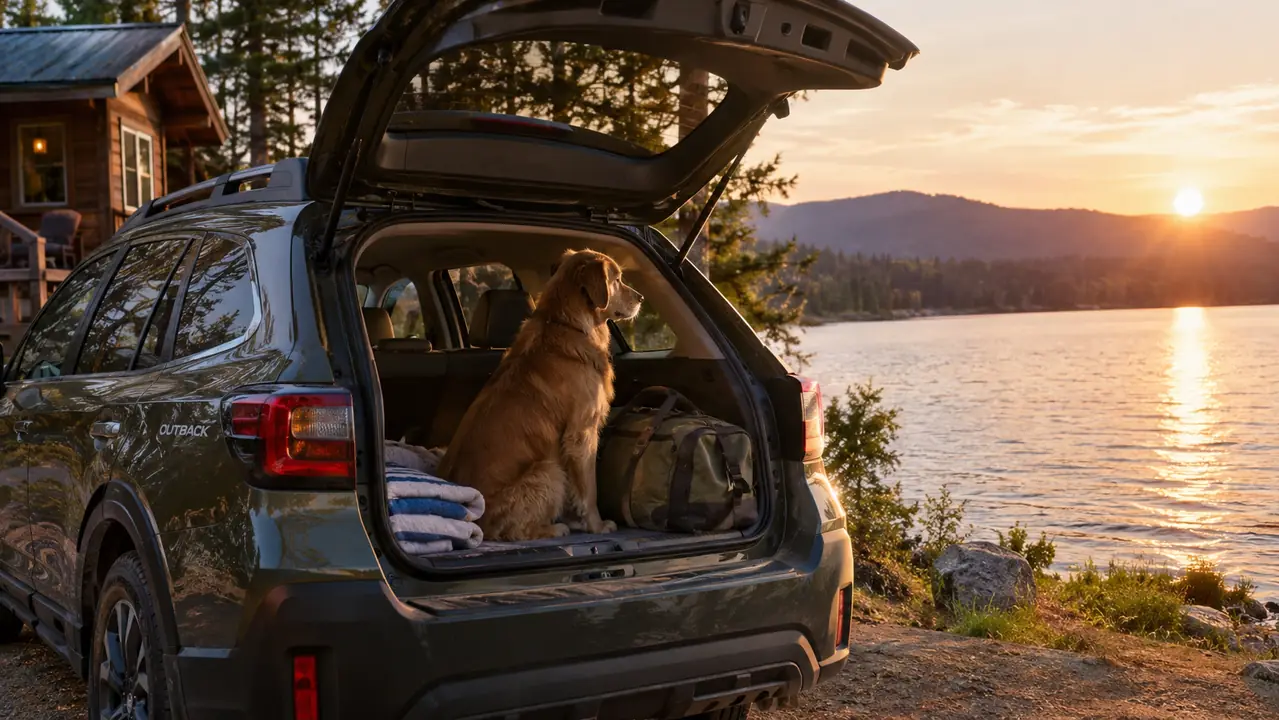
Most of last spring, our dog gear lived in a plastic grocery sack in the back of the Subaru Outback. Maple, our 45-pound Australian Shepherd mix, needs water, food, a collapsing bowl, a first aid kit, poop bags, a towel, and at least one squeaky toy on every trip, and that sack tipped over in the cargo area, tore at the handles, and hid the leash at exactly the wrong moments. I spent thirty years as a school librarian, and I can tell you that a system that fails you is not a system. So when the PetAmi travel tote arrived before our first lake cabin week of the season, I gave it the only test I trust: real trips, real messes, real miles, with a dog who does not care about my carefully made plans. She also has a talent for finding the one muddy patch in any parking lot, so whatever we carry has to survive being dropped, sat on, and occasionally dragged across gravel.
This is not a review of the PetAmi bag on its own. This is the question I actually had to answer, and maybe you are standing in the same aisle I was: should you carry dog gear in a tote you can grab from the passenger seat, or in a backpack you wear on your shoulders? I tested both across the same stretch of interstate, the same pet-friendly motels, and the same trailheads for about six weeks of travel. The short answer: for the way Ron and I travel, the tote wins. It is the bag that came out of the car every single night. But the backpack won some honest battles along the way, and you deserve to see both sides before you commit. I am not going to pretend I tested these in a laboratory. I tested them the way you will use them, which is the only test that counts.
| PetAmi Travel Tote | Dog Gear Backpack | |
|---|---|---|
| Carrying style | Carried by sturdy handles, in your hand or over your shoulder, set down anywhere | Worn on both shoulders, hands free, weight close to your back |
| Grabbing what you need fast | Opens wide, everything visible at a glance, reachable from the driver's seat | Top loading, so you dig down past the food bag to find the water bottle |
| Organization | Multiple pockets, insulated bottle holders, a ring to clip the leash, room for a book or tablet | One big compartment plus a couple of pockets, more of a haul everything design |
| Comfort on a long walk | Fine for the short carry from car to cabin, awkward past half a mile | Built for miles, weight rides on both shoulders and your hips |
| Fits over a rolling suitcase handle | Yes, slips over the handle like a proper travel bag | No, it is a backpack |
| Cleaning | Wipes clean with a damp cloth, no straps to untangle | More straps, zippers, and pockets to work around |
| Best for | Car trips, motels, cabins, quick grabs from the trunk | Hikes and long walks where you carry everything yourself |
Ron and I live in Asheville and spend about four months a year on the road, mostly national parks, lake towns, and pet-friendly motels, with Maple in the back seat of the Outback. For this comparison I ran both bags through the same six weeks: two long interstate hauls, a week at a lake cabin near Brevard, three nights in a motel outside Gatlinburg, and four trailhead stops in the Blue Ridge. I packed both bags the same way, water, food, bowl, towel, first aid kit, poop bags, and a toy, and I kept a small notebook on the passenger seat to write down every time a bag annoyed me and every time it made my life easier. The notebook does not lie, even when my memory wants to. Maple does not care about methodology. She just wants her bowl when she wants her bowl, which makes her the strictest tester I know.
Where PetAmi Wins
The biggest difference shows up at a rest stop, which is where most of our arguments with dog gear happen. Maple drinks a lot on the road, and when she needs water, she needs it now, not after I have unpacked half a bag. With the PetAmi tote, I reach over the seat, unzip the wide opening, and everything is exactly where I left it: the collapsible bowl in its own pocket, the water bottle in the insulated holder, the leash clipped to the ring on the side so it never sinks to the bottom. I can pass the bowl to Ron without taking my eyes off the road for more than a second. With the backpack we borrowed for this test, I had to wrestle it onto the passenger seat, unzip the top, and dig down past the food bag to find the bottle. That works fine at a trailhead. It is a lot less fine at 7 a.m. on the shoulder of I-40 with a restless dog whining in the back seat and a line of trucks going past. When a bag makes the easy moment easier and the hard moment less hard, that is the whole job. And for the record, the notebook shows the tote annoyed me exactly twice in six weeks, once when I left it on the porch in the rain and once when Maple chewed the corner of a pocket tag. Both were my fault, not the bag's.
The tote also fits the way we actually live on a trip. It sits flat on the passenger floor and does not roll over when Ron brakes. It slips over the handle of a rolling suitcase at the motel, which a backpack simply cannot do. It hangs from the back of a chair at the cabin, and it looks perfectly reasonable sitting on a bench outside a diner in Gatlinburg while we eat breakfast. It fits under the table at a motel breakfast room without tripping anyone, which is more than I can say for a backpack slung over a chair. When Maple stepped in a mud puddle at a trailhead near Boone and then sat down on the bag, I wiped it clean with a damp cloth and it looked as good as new. The backpack we tested has more straps, more zippers, and more places for mud to hide, and it does not stand up on its own the way the tote does. For a bag that lives in a car for weeks at a time, that ease matters more than I expected. It is the reason the PetAmi tote, not the backpack, rides in the Outback with us. On a nine day loop through the Great Smoky Mountains and up into Virginia, I kept a small notebook of every time we reached for the bag. It came out of the car twenty six times. Twenty of those were quick grabs at a pullout or a gas station: a poop bag, the spare leash, a handful of kibble for Maple after a long stretch of driving. With the PetAmi tote on the floor, each of those took a few seconds because the side pockets are open at the top and everything stands upright. I never once had to unpack the whole thing to find the one item I wanted, which is exactly what used to happen with the grocery sack.
Where the Dog Gear Backpack Wins
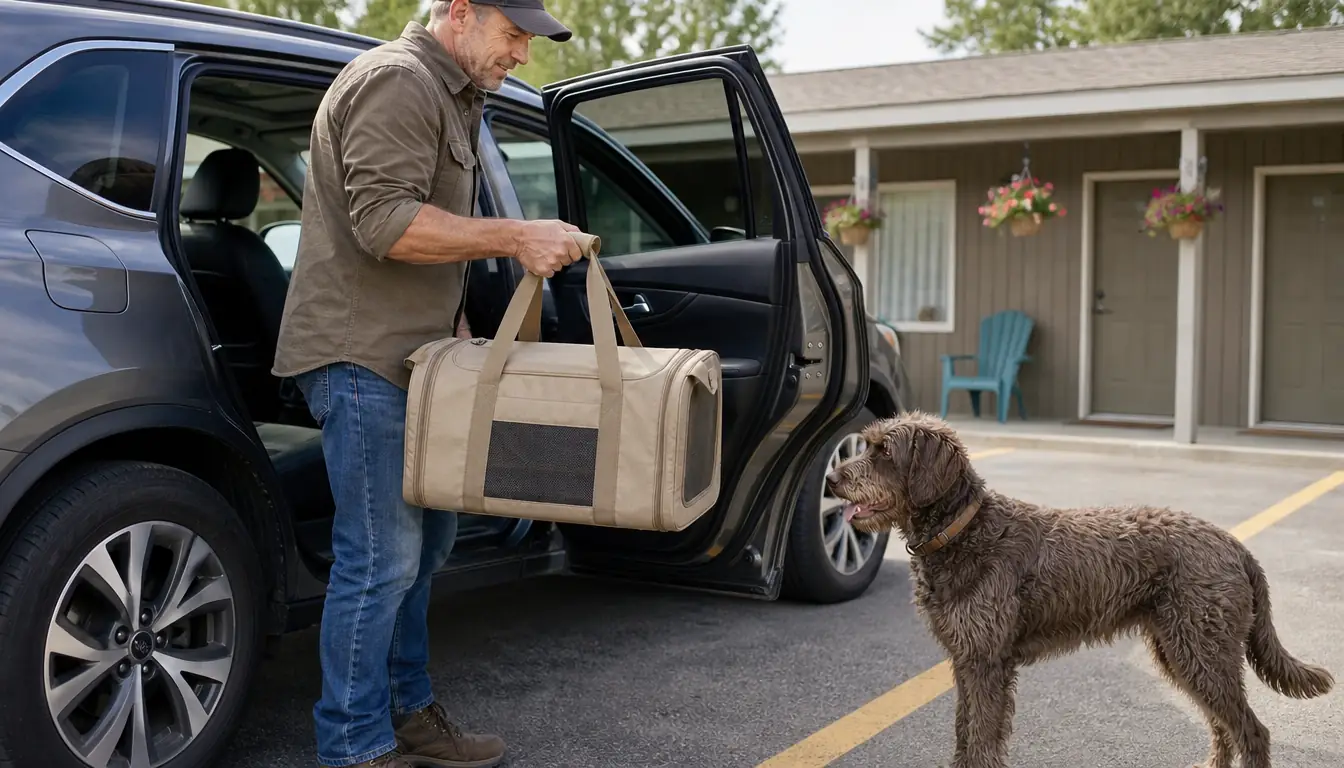
Now the honest part, because a comparison that only praises one side is not a comparison. On the days we actually hiked, the backpack was the better carry. When you load up water for Maple, water for us, lunch, a first aid kit, and a spare towel, the weight adds up fast. The backpack puts that weight on both shoulders, close to your center of gravity, and it stays put while you walk. The tote, carried in one hand or slung over one shoulder, pulls to one side and gets heavier with every step past about half a mile. On a three-mile loop around a mountain lake, I was genuinely grateful for the backpack, and I said so out loud, which made Ron laugh. I should also say the backpack we borrowed is a good one, not a cheap knockoff, because a cheap backpack would not have won any of these battles either. If your trips are built around long trails, a dedicated dog gear backpack, something like the Ruffwear Pack Out, is the right tool for the job, and I would not argue with anyone who chooses one.
The backpack also wins when your hands need to be free. Maple walks well on a leash, but she is an anxious dog on new trails, and I like having both hands ready for the leash, a map, or a water bottle. With the tote, one hand is always busy, and on uneven ground that bothered me more than I expected. With the backpack, I clipped Maple's leash to my belt loop, kept both hands free, and just walked. That is a real advantage, and it is the reason I can see a household owning both. I also noticed the backpack made Ron more likely to offer to carry the gear, which is not a small thing after thirty years of marriage. But here is the honest ending to that thought: across four months of road trips, the backpack stayed in the trunk except on trail days. The tote came out of the car every single night, at every motel, at every cabin, at every rest stop. That is the difference between a specialist and a daily driver, and for us the daily driver wins. The clearest example was a morning at a trailhead near Linville Gorge. The lot was full, we parked a quarter mile down the road, and the walk in was steep gravel with no shoulder. Ron had the camera, I had Maple, and the backpack carried water, treats, bags and a small first aid kit with both of my hands free for the leash and the railing. If I had been carrying the PetAmi tote that morning, it would have been bumping against my hip the whole way. For hikes like that, a backpack is simply the right tool, and I would not pretend otherwise.
For car trips, motels, and cabins, the PetAmi tote is the one I reach for
It holds everything Maple needs, opens wide, and sits flat on the passenger floor. If you travel like we do, it is the bag that earns its spot in the Outback.
Amazon Check Today's Price on Amazon →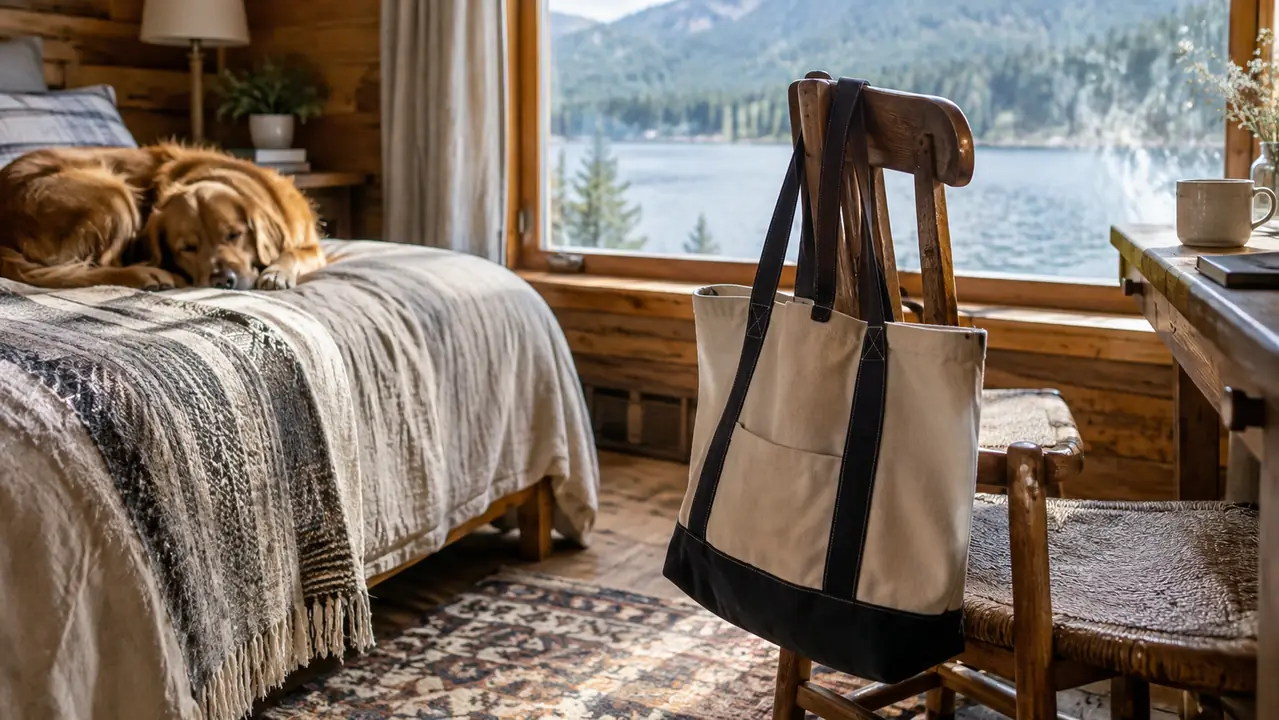
Who Should Buy Which
Buy the PetAmi travel tote if you live out of your car for long stretches the way we do. Buy it if you want your dog's water, food, bowl, towel, and toys visible and reachable from the front seat. Buy it if you would rather grab one bag from the passenger floor than dig through a backpack balanced on your lap. Buy the dog gear backpack if your trips are mostly hikes, if you carry all the gear on your back for hours at a time, or if you simply hate having one hand occupied. If you mostly drive to a trailhead, walk a mile, and drive home, you do not need the backpack. If you mostly drive four hours, unpack at a cabin, and stay for a week, you do not need it either. Maple is more of a car dog than a trail dog, so for us the answer is clear: the tote is the bag that lives in the Outback, and the backpack is the one we borrow for special days.
One tradeoff worth naming before you decide. The tote does not have a way to strap itself down, so in the cargo area it slides around unless you wedge it between other bags. It has never tipped over for us, because the bottom is wide and flat, but I do tuck it behind the cooler on rough gravel roads. The backpack, when empty, sits quietly in a corner and does not roll anywhere. Neither issue is a dealbreaker, but you should know how each bag behaves in a moving car before you choose. I will also say this: whichever you choose, look for a wide opening and a flat bottom. Those two details, more than any pocket layout, are what make a dog bag easy to live with, and they are exactly why the PetAmi tote wins the car test, which is the test that matters most to a family that lives on the road.
Ron's only complaint was that I kept talking about the bags. When I asked him which one he would grab for a weekend trip, he pointed at the tote without looking up. When I asked him which one he wanted for a long hike, he pointed at the backpack. That may be the shortest honest review either of them will ever get.
The bag that has ridden with us for six weeks of trips
Maple's water, food, bowl, towel, and toys, all in one place, all visible, all reachable from the driver's seat. That is the whole job, and the PetAmi tote does it.
Amazon Check Today's Price on Amazon →