
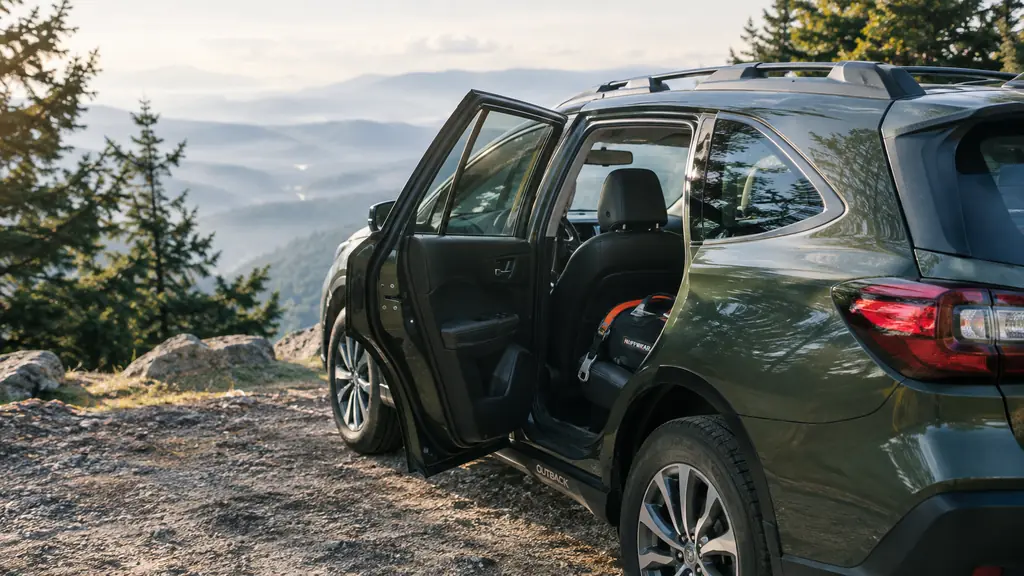
Six years ago I drove home from the Asheville animal shelter with a wiggly Australian Shepherd mix in the back seat of our Subaru Outback, and the first thing I bought for the car was a simple seat belt tether. It clipped to her collar, took ten seconds to hook up, and I felt very responsible. For a while, that was enough. Then a deer ran across the Blue Ridge Parkway in front of us, I hit the brakes, and Maple hit the end of that strap like a bag of groceries. She was fine, but I was not, and I started asking questions a cheap strap could not answer.
This spring I finally put the question to the test. I ran the Kurgo Enhanced Strength Tru-Fit harness next to that old tether through a full season of road trips: four national parks, a week of lake cabins in the Smokies, and one long haul up to a pet-friendly motel in the Shenandoah Valley. Same dog, same car, same back seat, and I kept notes the whole way. The short answer is that the Kurgo is safer, and it is not close. The longer answer, including where a simple tether still makes sense, is what this comparison is for.
| Kurgo Tru-Fit Harness | Simple Seat Belt Tether | |
|---|---|---|
| Crash protection | Crash tested, with a padded chest and five-point adjustment that hold the dog in the seat | No crash rating. It limits roaming but does not restrain the body in a collision |
| Setup | Fit the harness once, then thread the seat belt through the guide each trip | Clip one end to the collar or harness and click the other into the buckle |
| Comfort on long drives | Padded chest plate spreads pressure. Maple rides six hours without fussing | No padding at all. Fine for short trips, rough on a full day of driving |
| Fit | Five adjustment points handle a wide range of body shapes | One strap fits every dog because it does no fitting at all |
| Price | Costs more up front, but it is the crash-tested system | Costs less up front and nothing else to buy |
| Best for | Highway miles, anxious dogs, anyone who treats the car like a second living room | Short local trips with a calm dog who stays put |
How I Tested These
I ran both options for a full month before writing anything down. For the first two weeks the tether rode in the car, clipped to Maple's walking harness on local runs and a few longer drives. Then I switched to the Kurgo, fitted once on a Saturday morning, and left it in place for the rest of the month. Same routes, same dog, same back seat of the Outback. I kept a small notebook in the door pocket and wrote one line after every drive about how Maple rode.
I judged them on four things: whether Maple stayed in her seat during hard stops, how comfortable she looked after an hour of driving, how easy the setup was on a rushed morning, and whether the gear held up to daily use. I also watched her behavior, because a dog that braces or paces is telling you something even if she never makes a sound.
What 'Crash Tested' Actually Means
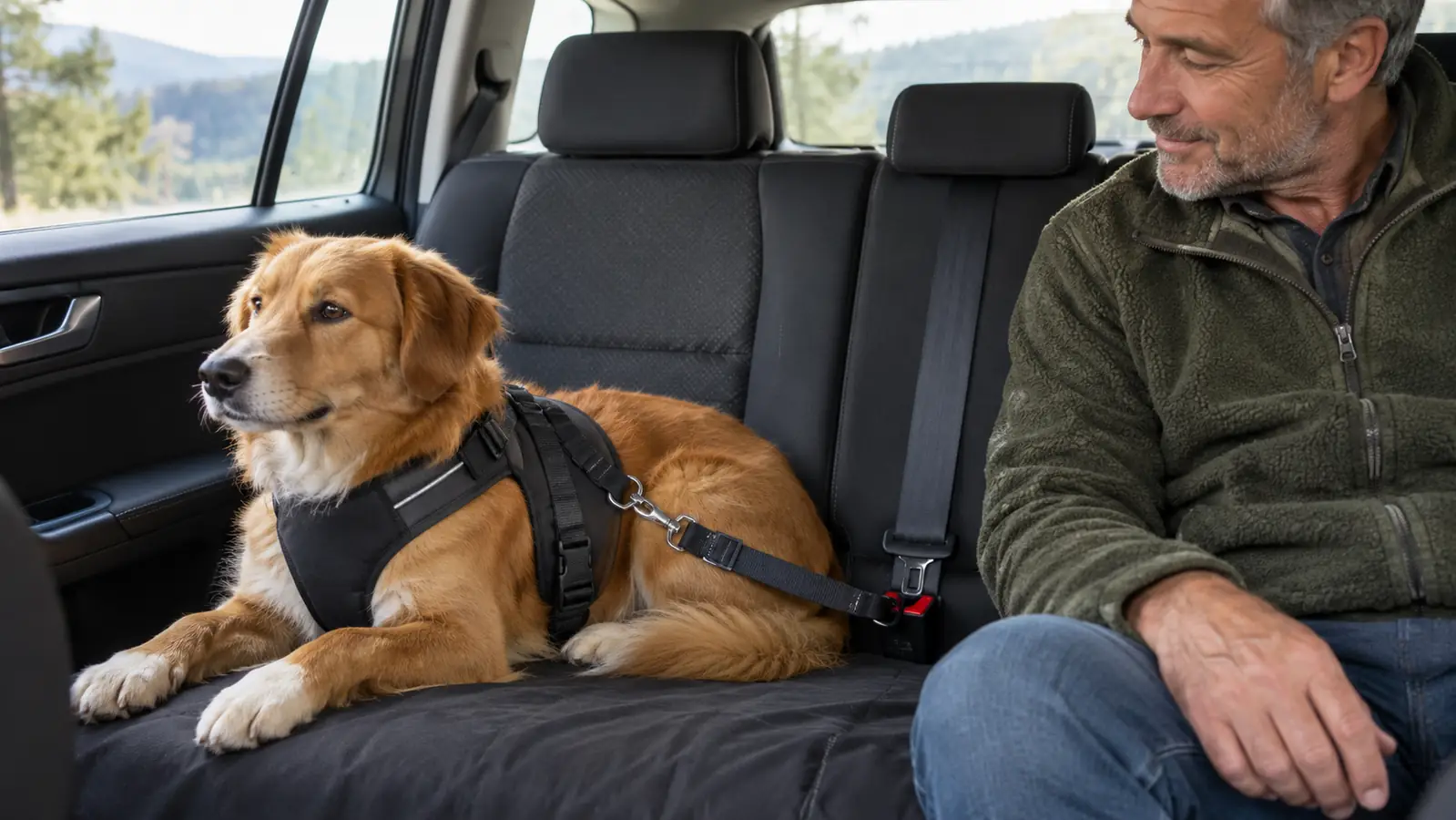
The phrase gets thrown around, so let me be specific about what it does and does not mean here. Kurgo says the Tru-Fit is crash tested, and the design backs that up: the seat belt threads through the harness so the belt, the buckle, and the stitching work as one system. The point of the test is to show that a dog stays in the seat and the harness does not come apart under sudden force.
A simple tether makes no such claim, because it is not built for that job. It is a leash for the car. That distinction matters more than the price difference, because the moment that matters is the one you cannot rehearse. I have never been in a serious collision with Maple in the car, and I hope I never am. But I have stopped hard enough to know what the tether does in that moment, and I did not like it. That is also why I would never attach a tether to a collar under any circumstances. A collar is not built to take a sudden load, and the neck is not built to receive one.
Where the Kurgo Tru-Fit Wins
The gap shows up the first time you brake hard. With the tether, Maple had a couple of feet of slack, so a sudden stop meant she left the seat, hit the end of the strap, and came back down with her front legs braced. The collar took the whole load, right across her throat. She never complained, because she is a good dog, but she braced for every stop after that, and a dog that braces is a dog that is not relaxed.
The Kurgo works differently. You fit it once, adjusting the chest piece and belly strap until the harness sits snug without digging in, and then the seat belt threads through the harness itself. When we had to stop hard on the Blue Ridge Parkway, Maple stayed in her seat. The padded chest plate spread the force across her chest instead of her neck, and the five-point adjustment meant nothing shifted out of place. The belt stays low across her chest, which is where the harness is built to take the load. She used to pace across the back seat for the first twenty minutes of a drive. Now she settles in by the time we reach the first turn.
I also like the secure buckle. The first tether I owned had a clip that came undone once when Maple shifted onto it, and I looked in the rearview mirror to see her standing between the seats. The Tru-Fit buckle has held through four months of daily use, and the harness stays put because it is fitted to her body instead of hanging from her neck.
One more thing I did not expect: the Tru-Fit doubles as a walking harness, so it earns its keep even when the car is parked. We use it at trailheads and on the greenway, which means Maple wears one harness all day instead of two, and I never have to switch gear between the trail and the highway.
The tether kept Maple from climbing into the front seat. The Kurgo kept her in her seat when I had to stop hard. Those are two different jobs.
Where a Simple Tether Wins
I am not going to tell you the tether is useless, because it is not. It is simple, it costs less, and it takes about four seconds to set up. If you clip it to a well-fitted walking harness instead of a collar, it will keep a calm dog from climbing into the front seat, which is a real job on its own. For a ten-minute drive to the groomer or a two-mile run to the vet, a tether is honest protection against the most common problem, a dog wandering the car while you drive. It is also the option most people already own, which is a fair point in its favor.
The tether also works in any car. It clicks into the seat belt buckle, so it does not care whether you drive a Subaru Outback or a borrowed pickup. You can move it between vehicles in seconds, and anyone can install it, including a teenager or a grandparent. The Kurgo takes a few minutes to fit properly the first time, and you have to remember to thread the seat belt through the harness on every trip. On a busy morning, that is a small but real cost.
What the tether cannot do is hold a dog in a crash. It limits how far a dog can roam, but the dog still has slack, and a 45-pound dog moving at highway speed carries a lot of force. That force lands on whatever the strap is clipped to, and if that is a collar, it lands on the neck. I used a tether happily for years because I did not know any better. Now that I have driven the same dog with both, I would not go back. Physics is not on your side in a crash, and I would rather not learn that lesson the hard way.
If you do drive with a tether, set it up the safe way. Clip it to a well-fitted harness, keep the strap short enough that your dog can sit and lie down but not reach the front seat, and never attach it to a collar. Even with all that, remember the tether is a convenience, not crash protection.
The tether is fine for errands. For the highway, bring the Kurgo.
The Kurgo Tru-Fit is the harness I reach for every time we back out of the driveway for a long trip. It fits Maple in about five minutes, rides comfortably for hours, and keeps her in her seat when the road surprises us. With 7,857 ratings and a 4.3-star average, it is the choice of a lot of dog owners who drive the way I do. Check today's price on Amazon and see if it matches your dog's measurements.
Amazon Check Today's Price on Amazon →
Who Should Buy Which
Buy the Kurgo Tru-Fit if your dog rides with you more than a few minutes at a time, if you drive on highways, if your dog gets excited or anxious in the car, or if you have ever looked in the rearview mirror and seen a dog standing between the seats. It costs more and takes a few minutes to fit, and for anyone who drives the way we do, it is worth every minute.
Buy a simple seat belt tether if your trips are short, your dog is calm and stays put, and you will clip it to a harness rather than a collar. It is the right tool for the two-mile vet run. Just know what it is: a way to keep a dog from roaming the car, not a way to hold a dog in a crash. If your dog is small, a tether is also easier to use with a good walking harness, and it is a perfectly honest choice for local driving.
If your dog is young and still growing, the Kurgo is the better first purchase. You can adjust it through the five points as they grow, and you will not have to buy your way up to real protection later.
How to Get the Fit Right
The Tru-Fit only works if it fits, and the five-point adjustment is the whole point. Measure your dog's chest at the widest point and around the neck, then start with the sizing chart and adjust from there. The chest piece should sit flat against the sternum, the belly strap should be snug enough that you cannot fit more than two fingers under it, and nothing should twist when your dog moves.
The first time I fitted it on Maple, I left the chest piece too loose and she walked sideways for five minutes. A minute of adjusting fixed it, and she has worn it every trip since. Take the extra few minutes the first time, and re-check the fit every few weeks, because a harness that fits in April can be too snug by July if your dog gains a pound or two.
The Bottom Line
If you drive anywhere a dog can get hurt, buy the Kurgo Tru-Fit and take the ten minutes to fit it properly. No harness can promise to make a car ride a crash test, and anyone who claims otherwise is selling something. What the Tru-Fit does is put your dog in the strongest position a harness can offer, with the padding and the seat belt path working together instead of against each other.
The tether stays in our glove compartment for the rare two-minute trip, and that is the honest role for it. Maple rides in the Kurgo on every real drive, and I sleep better knowing she is held in her seat the same way we are.
I am not a veterinarian or an engineer. I am a dog owner who spent a month paying attention, and the difference between the two setups was obvious from the first hard stop. If you are trying to decide between them, that is the test that matters.
Measure your dog, then check the fit chart.
The Tru-Fit comes in sizes, and the five adjustment points mean a good fit for a wide range of body shapes. Measure your dog's chest before you order, and the sizing chart on Amazon is easy to follow. Check today's price and see which size matches your dog's measurements.
Amazon Check Today's Price on Amazon →