
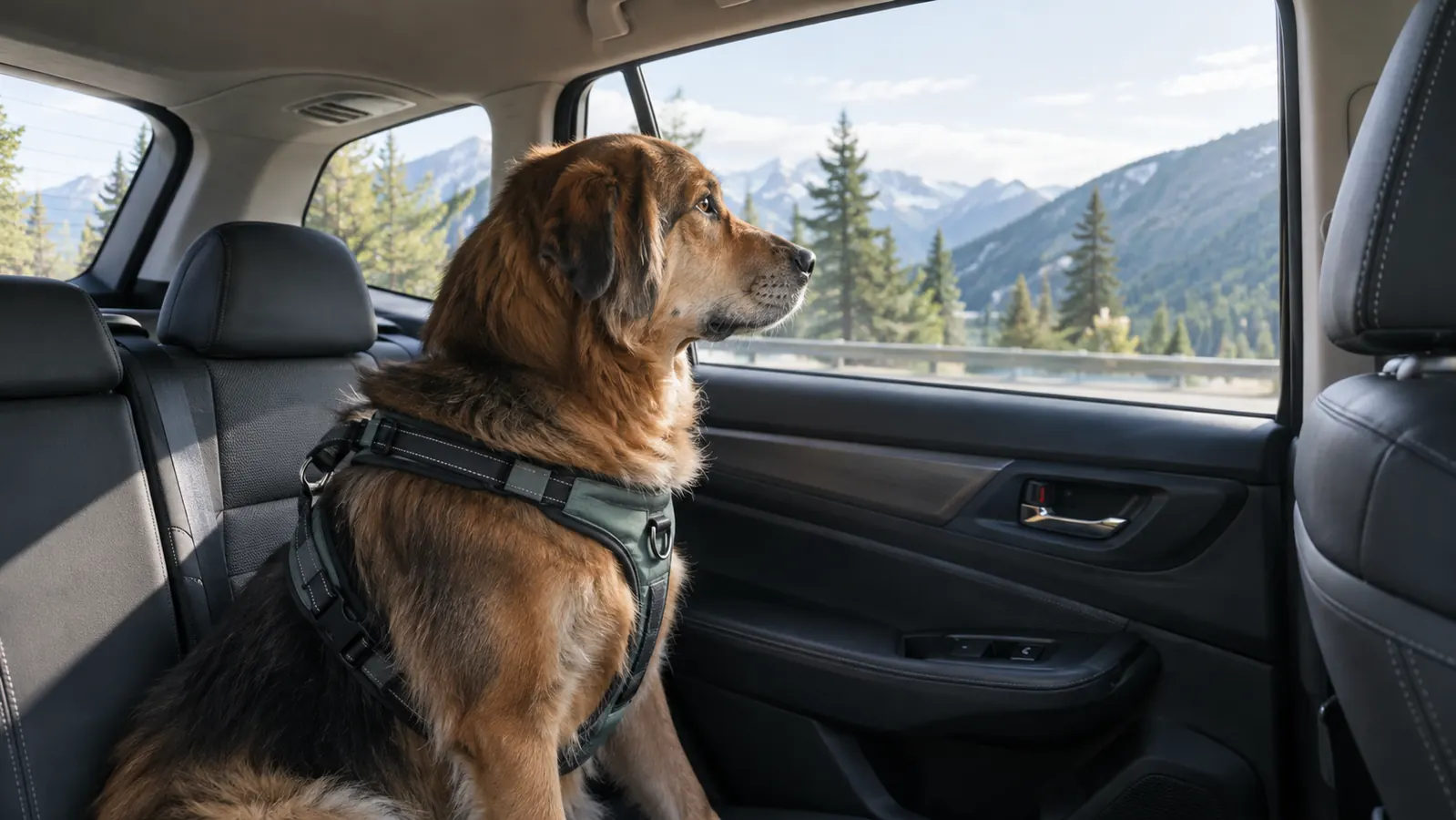
The first time I buckled Maple into the Kurgo Tru-Fit, she stood very still, gave me a look that said "I am tolerating this," and then lay down on the back seat of our Subaru Outback and went to sleep before we reached the end of our street. That was a year and about nine thousand miles ago. Since then, this harness has ridden along on every trip Ron and I have taken, from the Blue Ridge Parkway in October to a long haul out to Badlands National Park, and it has earned a permanent spot in our travel kit.
I am Gail Fenwick, a retired school librarian from Asheville, North Carolina. Ron and I spend about four months a year on the road, and Maple, our 6-year-old Australian Shepherd mix, comes with us on every mile. She is about 45 pounds, gets anxious on long drives until she settles into a routine, and has never met a motel bed she did not like. This is the story of a full year with the Kurgo Tru-Fit, the good, the annoying, and the genuinely reassuring.
The Quick Verdict
The Kurgo Tru-Fit is the harness I trust for real road trips. It is crash-tested, comfortable enough for a full day of driving, and the five adjustment points mean it fits a squirmy 45-pound dog properly. It is not the easiest harness to put on, and the padding can run warm in summer, but for travel safety it is the best we have used.
Amazon Check Today's Price →The harness that has survived 9,000 miles of road trips with our dog
After a year of national park trips, lake cabins, and long interstate hauls, the Kurgo Tru-Fit is still the first thing I pack. Check today's price on Amazon and see if it fits your travel routine.
Amazon Check Today's Price on Amazon →How I've Used It
Maple rides in the back seat of our Outback, and the Kurgo Tru-Fit is the piece of gear that connects her to the car. I use the seat belt tether that threads through the harness's back panel, which keeps her from roaming the cabin and gives her just enough slack to lie down or sit up. On a typical trip, she wears the harness for the whole drive, including rest stops, because clipping and unclipping her at every gas station would get old fast.
Over the year, the harness has been through a lot: a rainy week in the Smokies, a dusty stretch of back roads in Utah, a motel room where she rolled on the carpet until she was covered in who knows what, and at least a dozen trips through the car wash after muddy hikes. I have washed it by hand in the sink with mild soap and hung it to dry, and it still looks and works like it did on day one.
Our routine settled in after about a week. I clip the harness on before we leave the driveway, thread the tether through the back panel, and click it into the seat belt buckle on the passenger side of the back seat. Maple knows the sound of that buckle now. The moment it clicks, she turns around twice and lies down. On one trip in early October, we hit a patch of construction on I-40 that stopped traffic for forty minutes, and she just waited, head on her paws, while the cars around us had dogs climbing all over the place, one of them hanging halfway out a window. That was the day I stopped checking on her in the rearview mirror every five minutes. It was also the day I stopped worrying that she would figure out how to work the window buttons with her nose, which she had done twice in the old car. Ron still checks her every time we stop, but I have stopped hovering.
I should say plainly that I am not a crash-test engineer. I am a retired librarian who reads the fine print, and the fine print here is better than most. Kurgo says the Tru-Fit is crash test certified, and the harness is built with a steel nesting buckle and reinforced webbing. I cannot promise what would happen in a serious accident, but I can tell you that the harness does what it is supposed to do every single day: it keeps Maple in her seat, comfortable and secure, for hours at a time.
What the Five Adjustment Points Actually Do
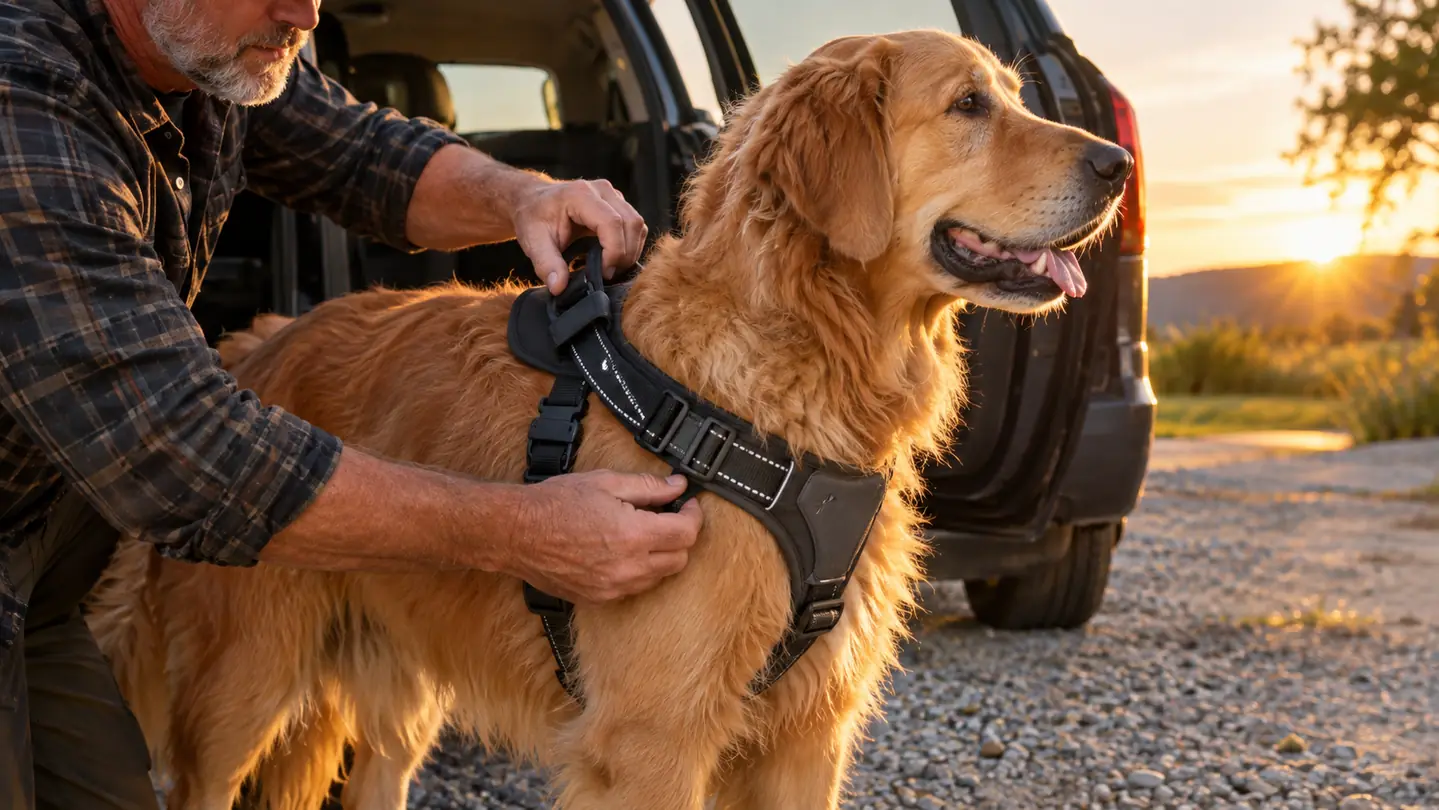
The Tru-Fit has five points of adjustment: two on the chest, two on the belly, and one at the neck. That sounds fussy until you live with it. The payoff is that you can fit a deep-chested dog like Maple without the harness sliding sideways or riding up into her armpits, which is the problem we had with her old one.
The first time I fitted it, I followed the instructions and measured her chest and neck. It took about ten minutes to get all five straps where I wanted them. After that, I barely touched the adjustments. The straps hold their position, which is more than I can say for some harnesses we have tried, and the buckles have never slipped or come undone, even when Maple throws her whole weight against the tether to lunge at a squirrel.
The measurements themselves were easy: chest at 28 inches, neck at 19 inches, and the medium size fit her without any guessing. The old harness, a basic strap model from a big box store, had a bad habit of sliding sideways until the front strap sat right behind her elbows. By the end of a long day, it had rubbed a raw patch on her left side, and I threw it out the week we got home. With the Tru-Fit, I check her skin after every long drive, and there has not been a single sore spot in a year. I also learned to set the belly straps looser than I first thought they should be. The first time I tightened them the way I would a walking harness, Maple walked stiffly for the first five minutes of a hike, and I loosened both straps a full inch before she moved normally again.
One thing I learned the hard way: the fit changes when the harness is loaded. The first few trips, I adjusted it while Maple was standing on the driveway, and then she would lie down in the car and the chest piece would shift. Now I adjust it, have her lie down, and then check the straps again. It takes an extra minute, and it makes a real difference in how the harness sits on her for a long drive.
Comfort on Long Drives
Maple is a restless traveler. On the way to the vet, she paces and whines. On a real road trip, once she settles into her spot, she sleeps for hours. The Kurgo Tru-Fit is the first harness that has let her do that without constant readjusting. The padded chest piece is soft against her sternum, and the straps are wide enough that they do not dig into her shoulders the way narrower webbing does.
Our longest single day in the car with this harness was about eleven hours, from western North Carolina to a lake cabin in Missouri. Maple wore it the whole way, with stops every couple of hours for water and a walk. She slept through most of the drive, and when we got to the cabin, she was ready to explore, not stiff or sore. That is the test that matters to me.
The Missouri trip in July is the one I keep coming back to, because it had every kind of driving in a single day: two-lane mountain roads, a long interstate haul, and a slow crawl through construction outside Nashville. Maple lay down somewhere around Knoxville and did not get up until we stopped for lunch in Clarksville. When we finally pulled into the cabin driveway at dusk, she hopped out, stretched each leg one at a time like a runner, and trotted off to inspect the yard. No limping, no stiffness, no sulking in the back seat the next morning when we loaded up for a hike. On the way home, four days later, she climbed into the car on her own and waited by the harness, which is the closest she comes to asking to go for a ride. I took that as a review.
The one comfort complaint I have is heat. The padding is substantial, which is what makes it comfortable, but on a 90-degree day in the car with the air conditioning struggling, Maple runs warmer in this harness than she did in a lighter one. We manage by keeping the car cool and taking her out of the harness at rest stops, but if you live somewhere hot and your dog is in the car a lot, it is worth knowing.
After eleven hours in the car, Maple stepped out of the Outback ready to explore, not stiff or sore. That is the test that matters to me.
The Seat Belt Tether and How It Holds Up
The Tru-Fit works with a seat belt tether that loops through the back panel of the harness and clicks into the car's seat belt buckle. I like that the tether is short enough to keep Maple from climbing into the front seat, but long enough that she can lie down and turn around. She has never once managed to get herself tangled, which I cannot say for the previous harness we used.
The tether attaches to the harness with a heavy clip that has held up to a year of daily use. I have also used the harness with a standard carabiner and a short leash when we are stopped, and the attachment point on the back is sturdy and well placed. The steel nesting buckle that secures the harness has never once popped open, even when Maple has thrown her weight against it.
The moment I trust this hardware the most happened in March, at a rest stop outside Knoxville. A squirrel ran across the grass about twenty feet from the car, and Maple launched herself from a dead sleep to the end of the tether in one motion. The harness took the full weight of a 45-pound dog at the end of a short lead, and neither the clip nor the buckle moved. She bounced off, looked embarrassed, and lay back down. I checked the webbing that night out of habit and could not find a single pulled thread. After a year of buckling and unbuckling at motels and trailheads, the clip still seats with the same solid click, and I have had cheaper clips wear loose after a few months. This one has not changed at all. I would trust it for another year of trips without a second thought.
One note for people with smaller cars: the tether works best when the seat belt buckle is within reach of the back seat. In our Outback, it is perfect. In a friend's two-door coupe, we had to angle the tether a little awkwardly. It still worked, but it was not as clean a setup.
What I'd Change
No piece of gear is perfect, and the Kurgo Tru-Fit has two things I would change if I could. The first is the learning curve. Putting this harness on a wiggly dog takes practice. There are five straps to adjust, and the first few times, I felt like I needed three hands. Once it is fitted, you can leave the adjustments alone and just clip it on, but the initial setup is not a five-minute job.
The second is the padding. It is genuinely comfortable, but it is also bulky. The harness takes up more space in my travel bag than I would like, and on hot days, Maple runs warm. If Kurgo made a version with lighter padding for summer, I would buy it in a heartbeat.
What I Liked
- Crash test certified, with a steel nesting buckle and reinforced webbing that inspire real confidence
- Five adjustment points mean a genuinely custom fit, even for deep-chested dogs
- Comfortable enough for an 11-hour drive; Maple sleeps in it like it is a bed
- The seat belt tether keeps her in the back seat without tangling
- Easy to hand wash and quick to dry
- Held up to a full year of road trips with no fraying, no loose stitching, and no broken buckles
Where It Falls Short
- Initial fitting takes time and patience, especially with a wiggly dog
- The padding is bulky and runs warm in summer heat
- The tether works best in cars where the seat belt buckle is easy to reach from the back seat
- Not the easiest harness to put on and take off quickly at rest stops
Who This Is For
The Kurgo Tru-Fit is for people who take their dog on real trips, not just around the block. If you drive to national parks, visit family for the holidays, or spend weekends at a lake cabin, and you want your dog to ride safely in the back seat, this harness is worth a serious look. It is especially good for medium and large dogs who are strong enough to pull against a tether, because the reinforced webbing and steel buckle are built for that.
It is also for people who are willing to spend ten minutes on a proper fit. The five adjustment points are the reason this harness works so well, but they only work if you actually adjust them. If you are the kind of person who reads the instructions and measures twice, you will love this harness. If you want something you can throw on a dog in ten seconds, keep looking.
Who Should Skip It
Skip the Kurgo Tru-Fit if your dog rides in the car for five-minute trips to the park and you want a harness that goes on and off in seconds. The learning curve and the bulk are not worth it for that kind of use. A simple walking harness will do the job and cost less.
Skip it if you live somewhere very hot and your dog spends a lot of time in the car. The padding is comfortable, but it holds heat, and a lighter harness will be more comfortable in a summer heat wave. And if you have a very small dog, under about 15 pounds, this harness is probably more hardware than you need. It is built for dogs with some substance to them.
Ready to make your dog a road trip regular?
The Kurgo Tru-Fit has earned its place in our travel kit after a year and 9,000 miles. If you are planning a trip with your dog, check today's price on Amazon and see if it fits your back seat as well as it fits ours.
Amazon Check Today's Price on Amazon →