
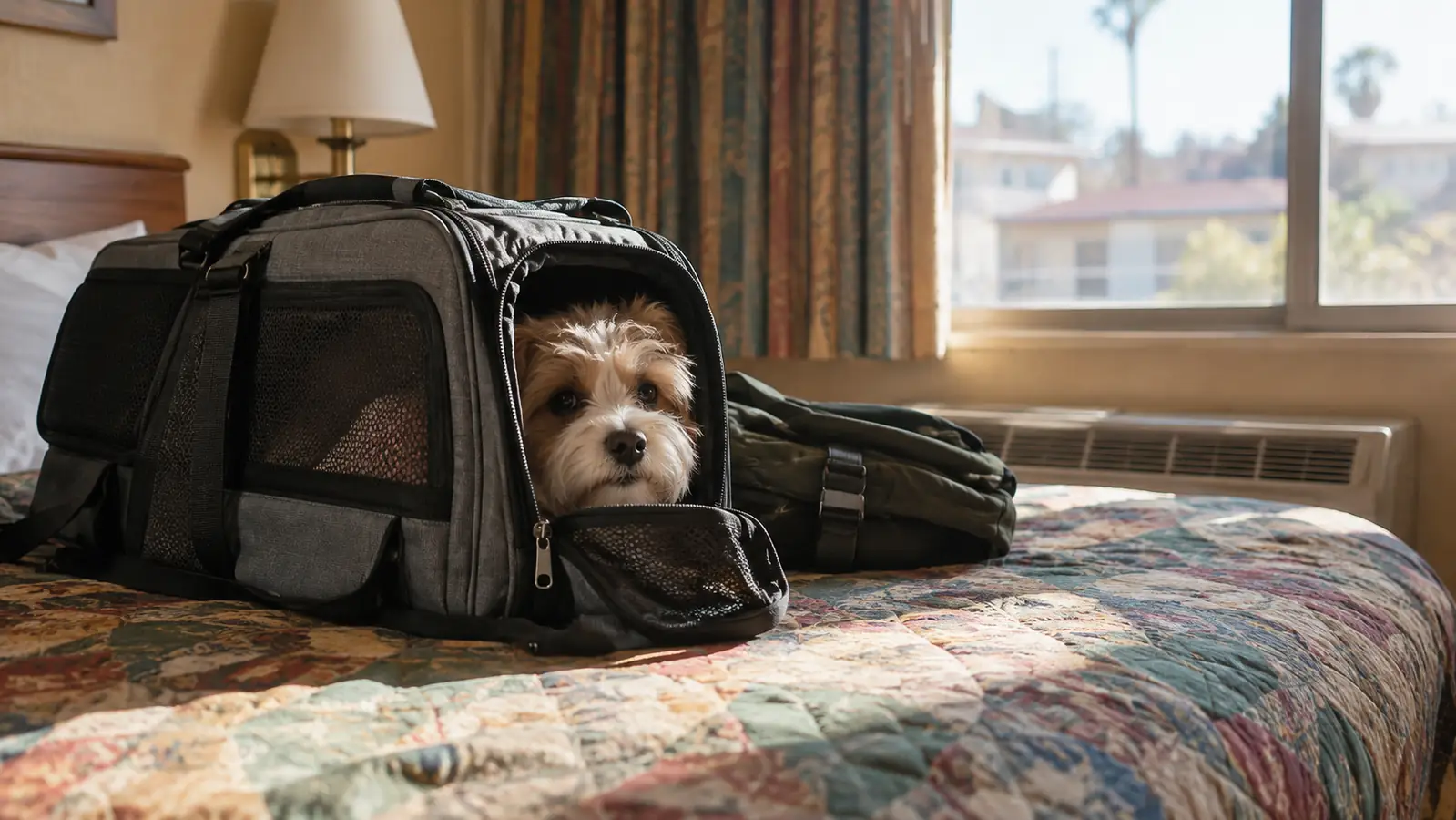
My sister Joan called me last spring with the kind of question that sounds simple and is not. She had just adopted Pip, a 10-pound Shih Tzu, and her daughter was getting married in San Diego. Joan wanted to bring Pip to the wedding, which meant a flight, a rental car, and three nights in a hotel that allowed dogs. She had never traveled with a dog in her life. She asked me, because I am the sister who has made every packing mistake there is, what carrier she should buy. I told her to start with the Sherpa Original Deluxe, the soft-sided carrier that has been the default answer for small-dog travel for years. Then I did what I always do. I borrowed Pip for a few weekends, and I tested the Sherpa the slow way, over real trips, not a lap around the living room.
Six months later, the Sherpa Original Deluxe has been through two flights, four hotel rooms, a dozen car rides, one very long wedding weekend, and a lot of motel floors. It has also been chewed, stepped on, and stuffed under an airplane seat. It still looks like a carrier that has been places, and it still does its job. Here is the long-term review I wish someone had handed Joan before she packed.
The Quick Verdict
The Sherpa Original Deluxe is the carrier I would buy for any small dog under about 16 pounds. It is airline approved, genuinely comfortable for the dog, and it has held up through six months of real travel. It is not a crate for a chewer, and the padding is not luxury, but for flights, hotels, and car rides it is the right tool.
Amazon Check Today's Price →The carrier that has flown, ridden, and slept through six months of trips
If you have a small dog and a trip coming up, this is the soft-sided carrier I would start with. It is airline approved, it fits under a standard seat, and it has held up through real travel with a real dog.
Amazon Check Today's Price on Amazon →How I've Used It
I need to be clear about something before I go further. Maple, my own dog, is a 45-pound Australian Shepherd mix, and she has never once ridden in a soft carrier. She is far too big, and she rides in the back seat of our Subaru Outback with a seat belt tether and a whole lot of opinions. Every carrier article on this site is about small dogs, roughly under 16 to 18 pounds, and this one is told through Pip, Joan's 10-pound Shih Tzu, on the trips Joan joins us for.
Joan lives in Charlotte, about two hours from us in Asheville, and she has joined us on three trips since she adopted Pip. The first was a long weekend in a lake cabin, where Pip rode in the Sherpa for the drive and slept in it at night. The second was the San Diego wedding, which meant two flights with the carrier under the seat in front of Joan. The third was a motel stay on the Blue Ridge Parkway, where the carrier lived on the floor between the beds. That is the testing I trust: not a week of simulated use, but six months of the carrier being packed, unpacked, shoved under seats, and slept in by a dog who had opinions about all of it.
I also did the boring tests that matter. I washed the liner the way the instructions say. I checked the zippers after every trip. I weighed the carrier empty and loaded. I measured it against the published airline dimensions. I watched Pip settle into it on a motel floor, and I watched Joan haul it through an airport with a carry-on and a purse. The carrier passed the tests that matter, and it failed a few small ones, and I will tell you about both.
What Makes the Sherpa Original Deluxe Work
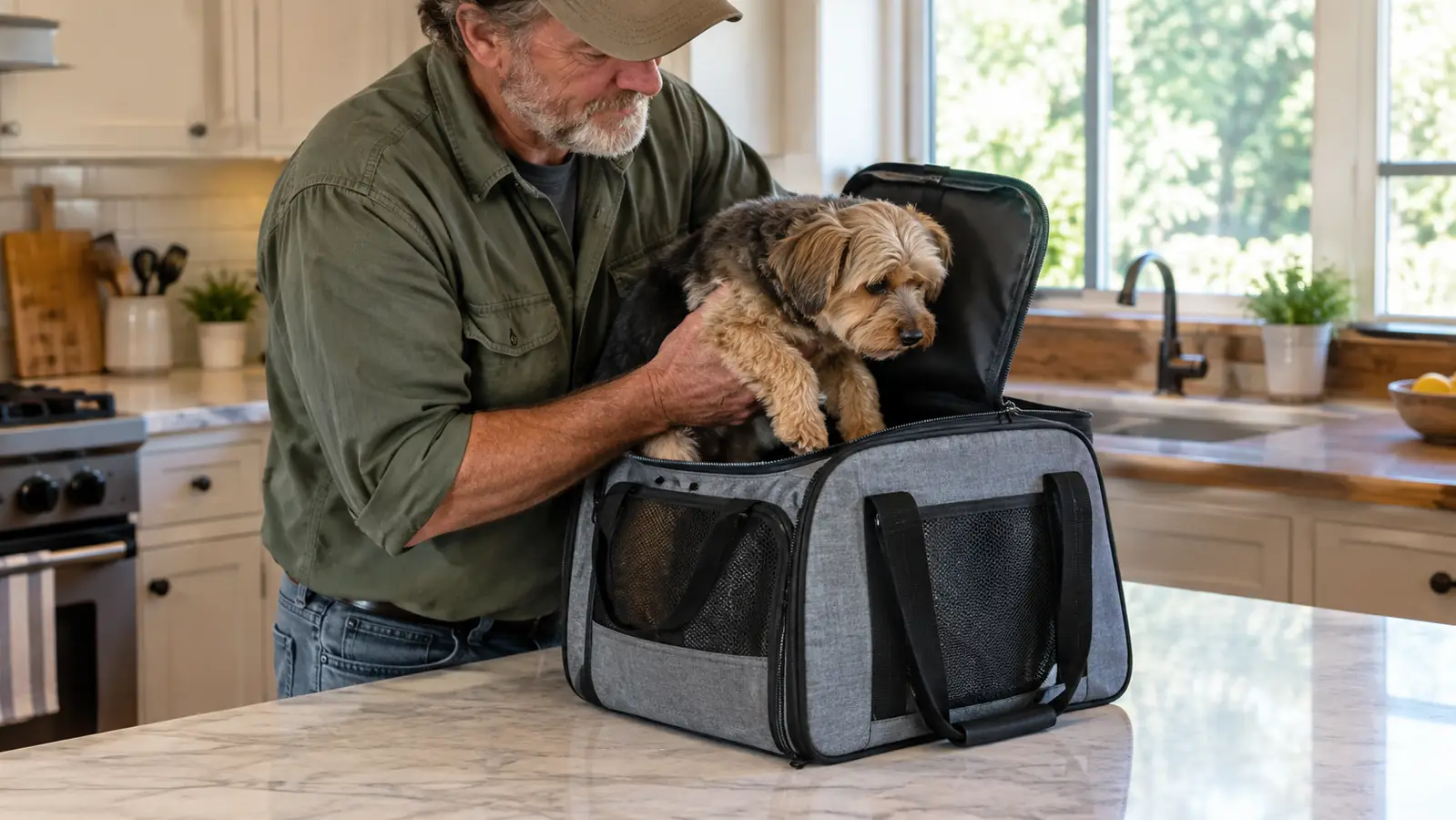
The Sherpa Original Deluxe is a soft-sided carrier with a steel frame, mesh windows on three sides, and a top that unzips so the dog can be lifted straight out. The medium size, which is what Joan used for Pip, measures about 17 by 11 by 10.5 inches, which fits under the seat on most major airlines. The brand is Sherpa, and the company has been making these carriers long enough that the design has been refined into something that just works.
The first thing I noticed is that the Sherpa does not collapse into a puddle when you set it down. The steel frame holds its shape, which matters more than you would think. A floppy carrier tips over when the dog shifts, and a tipped-over carrier is a stressed dog. Pip could stand up, turn around, and lie down inside the Sherpa, which is the standard airlines use, and the frame meant she could do all of that without the walls folding in on her.
The second thing is the top-loading zipper. This is the feature I would not give up. Joan could unzip the top and lift Pip straight out without wrestling her through the front opening. For a dog who gets anxious about being grabbed, that is a small mercy. It also made airport security easier, because Joan could open the top, lift Pip out, and send the empty carrier through the X-ray machine while she walked Pip through the metal detector on a leash.
The third thing is the liner. The Sherpa comes with a washable, replaceable fleece liner that snaps in and out. Pip threw up on the way to the airport once, which is exactly the kind of thing that happens on real trips, and Joan was able to unsnap the liner, rinse it in a motel sink, and have it dry by morning. You cannot do that with a carrier that has a sewn-in bottom. The liner is also sold separately, which means you can own two and swap them on a long trip.
How It Performed on the Trips That Matter
The flight test is the one that scares most new dog travelers, so let me start there. Joan flew from Charlotte to San Diego with Pip in the Sherpa, and the carrier went under the seat in front of her. The medium size fit without being wedged in, which is the difference between a calm flight and a flight spent kicking the carrier with your heels. Pip could see out through the mesh on the sides, and Joan said she spent most of the flight asleep with her nose at the mesh. The Sherpa is airline approved, and Sherpa even has a guarantee that if an airline refuses the carrier, they will work with you on it. We never had to use it, but it is the kind of thing that lowers the temperature of a nervous first flight.
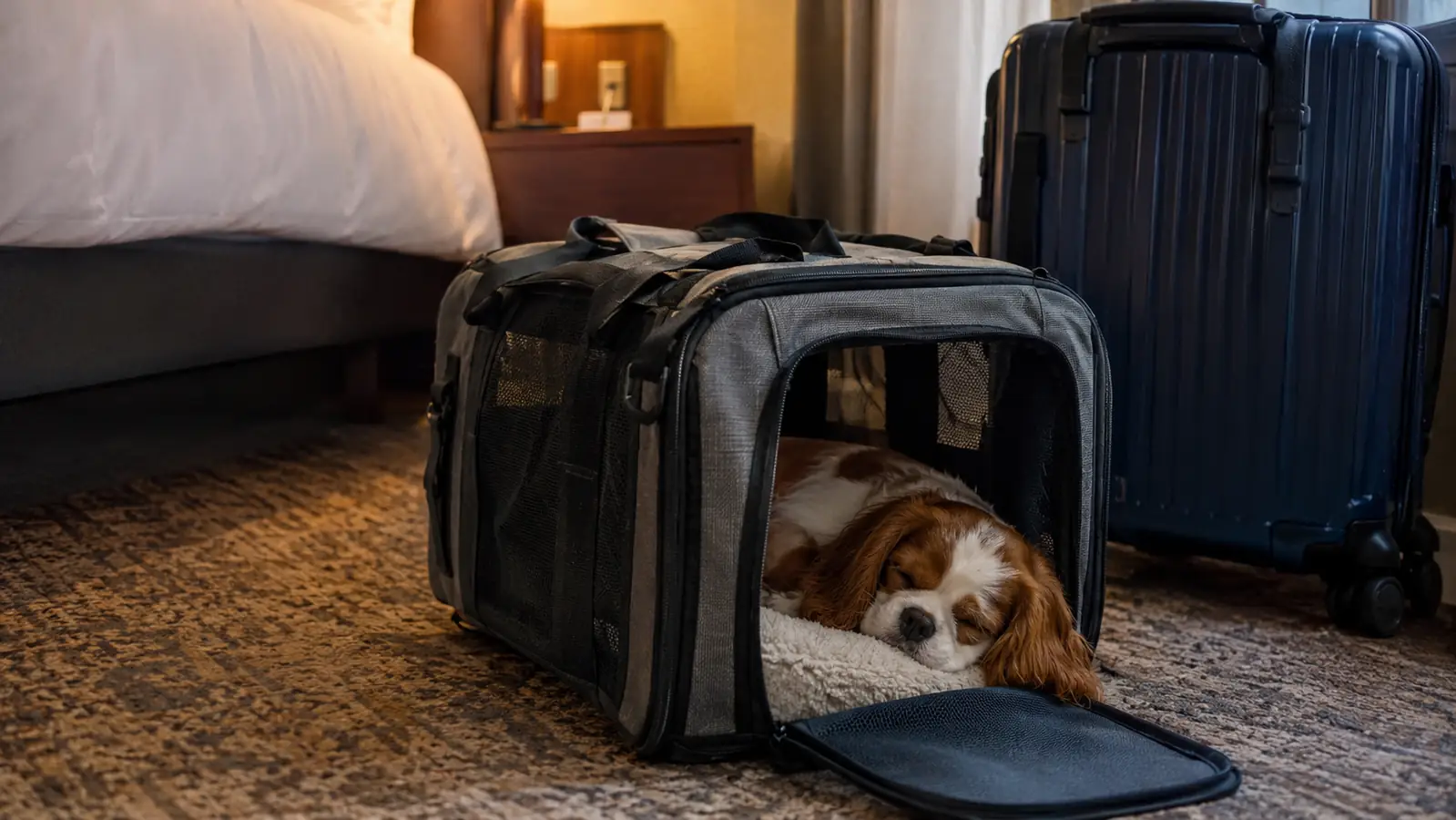
The hotel test is where a carrier either earns its keep or becomes a piece of luggage you trip over. Pip slept in the Sherpa on the floor between the beds at the motel on the Blue Ridge Parkway, and she also slept in it at the San Diego hotel. That is the thing I did not expect. The carrier became Pip's safe place, not just her travel crate. When the room was unfamiliar, she would climb into the Sherpa on her own and settle. That is worth a lot on a trip where the dog is already out of her routine.
The car test was the most ordinary and the most important. Pip rode in the Sherpa on the passenger seat, belted in with the seat belt threaded through the handle, for the two-hour drive from Charlotte to Asheville. She slept. On the way back, she slept again. For a dog who gets restless in new places, that is the highest praise I can give a piece of travel gear. The carrier did not slide around, the handle did not dig into anyone's hand, and the mesh did not flap in a way that bothered her.
Where the Sherpa Falls Short
I said I would tell you about the small failures, and here they are. The padding is not luxury. The Sherpa has a padded bottom and a fleece liner, but it is not a plush bed, and a dog used to a thick orthopedic bed will notice the difference. Pip was fine with it, but if your dog is used to sleeping on something soft at home, bring a small folded blanket to put inside the carrier. It makes the floor of the carrier more comfortable and it smells like home, which helps a nervous dog settle.
The second failure is the strap situation. The Sherpa has a shoulder strap and a handle, and both work, but the shoulder strap is not padded. Loaded with a 10-pound dog, the strap was fine for the walk through the airport, but it would dig in on a longer carry. If you are going to be carrying the carrier for more than a few minutes at a time, plan to switch arms or use the handle. It is not a dealbreaker, but it is a real limitation.
The third thing is not really a failure, but it is worth saying plainly. The Sherpa is a carrier, not a crate. A determined chewer can work at the mesh, and a dog who is destructive when stressed should not be left unsupervised in it. Pip is not a chewer, so this never came up for us, but I would not recommend the Sherpa for a dog who has destroyed a soft-sided crate before. That dog needs a hard-sided option, and the Sherpa is not it.
What I Liked
- Airline approved, fits under a standard seat, and backed by a guarantee if an airline refuses it
- Steel frame holds its shape, so the carrier does not tip or sag around the dog
- Top-loading zipper makes lifting a nervous dog out easy and calm
- Washable, replaceable fleece liner snaps out and dries overnight in a motel sink
- Mesh on three sides gives the dog a view and the owner a way to check on her
- Six months of flights, hotel floors, and car rides without a broken zipper or seam
Where It Falls Short
- Padding is basic, so a dog used to a plush bed will want a folded blanket inside
- Shoulder strap is unpadded and starts to dig in on longer carries
- Only fits dogs up to about 18 pounds, and the medium is the largest size
- Soft mesh sides are not for determined chewers, and it is not crash-tested for the car
The highest praise I can give the Sherpa is that Pip started climbing into it on her own when the hotel room felt unfamiliar. That is what a travel carrier is supposed to be: a safe place that happens to move.
Who This Is For
The Sherpa Original Deluxe is for the owner of a small dog, roughly under 16 to 18 pounds, who travels. That is the whole pitch, and it is a good one. If you fly with your dog, the Sherpa fits under the seat and is airline approved. If you drive, it turns the car into a place where the dog can sleep instead of pace. If you stay in hotels, it gives the dog a familiar spot on an unfamiliar floor. Joan used it for all three in the first six months she owned it, and it did all three jobs well.
It is also for the first-time dog traveler who is nervous about the whole thing. The Sherpa is the carrier that flight attendants recognize, that gate agents do not argue with, and that other dog owners nod at. That sounds like a small thing, but when you are already nervous about bringing your dog on a plane, not having to defend your carrier is a real comfort. Joan said the only question she got at the airport was whether Pip was a service dog, and that was from a passenger, not an agent.
Who Should Skip It
Skip the Sherpa if your dog is over about 18 pounds. The medium is the largest size, and a bigger dog will not fit comfortably, which is not the carrier's fault but is the carrier's limit. Maple, my own 45-pound dog, has never ridden in a soft carrier, and no soft carrier is going to change that. If you have a medium or large dog, you need a different solution entirely, and the Sherpa is not it.
Skip it if your dog is a chewer or a determined escape artist. The mesh sides are soft, and a dog who is stressed and destructive can work at them. The Sherpa is a travel carrier, not a containment system for a dog who needs one. Skip it if you want a carrier you can toss in the washing machine, because the Sherpa's liner is washable but the carrier itself is not. And skip it if you want a hard-sided crate for the car, because the Sherpa is not crash-tested and should not be used as a car restraint in a collision. For the car, it is a place for the dog to ride and sleep, not a safety device.
Six months of trips, and I would still buy it again
The Sherpa Original Deluxe has flown, ridden, and slept through every trip Joan and Pip have taken together. If you have a small dog and a trip coming up, this is the carrier to start with.
Amazon Check Today's Price on Amazon →