
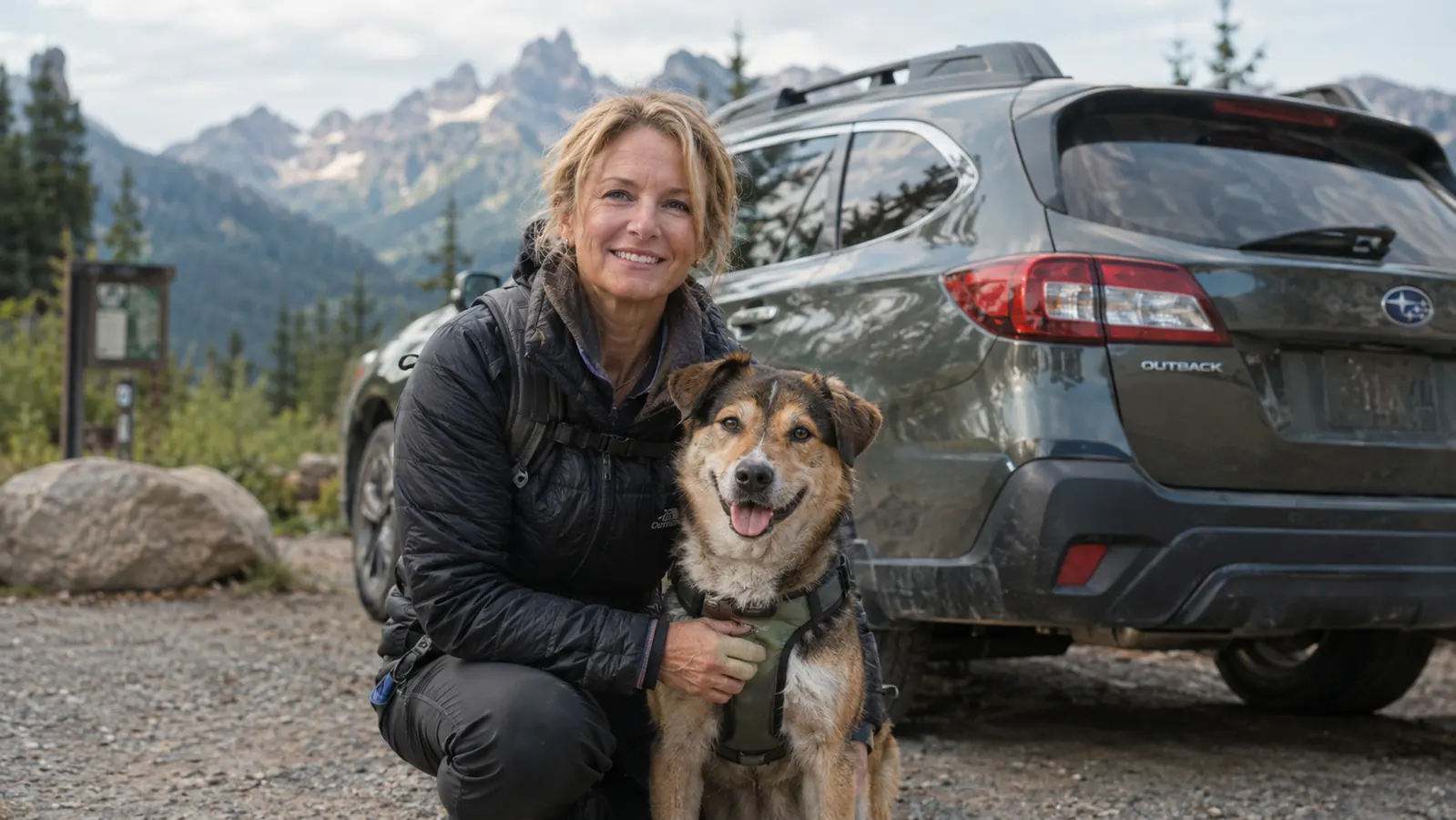
When I ordered the Kurgo Tru-Fit harness for Maple last spring, I did what I always do before a long trip. I read the reviews, watched two fitting videos, and measured my dog three times to be sure. A year and about six thousand miles later, I can tell you what the listing does not. This is the honest review I wished I had found before I bought it.
The Quick Verdict
A sturdy, thoughtfully padded harness that earns its place on long drives once you get the fit right. It just takes more patience than the package suggests.
Amazon Check Today's Price →The harness I keep reaching for on road trips
If you want a padded harness that holds up to daily use and real miles, this is the one I grab first. Check today's price on Amazon and see if it fits your dog's measurements.
Amazon Check Today's Price on Amazon →How I've Used It
Maple is a six-year-old Australian Shepherd mix, about forty-five pounds, and she rides in the back seat of our Subaru Outback. She is not a natural traveler. The first hour of any trip she paces, whines, and tries to climb over the center console. The harness is not magic, but it gives her a place to settle. That place matters more than I expected.
Since last spring we have put about six thousand miles on this harness. Trips to Shenandoah, a long loop through the Blue Ridge, lake cabins in Tennessee, and a stretch of pet-friendly motels along the coast. Ron does most of the driving. I sit in the back with Maple on the long hauls, and that is where I learned how the harness actually behaves.
The Fit Is the Whole Story
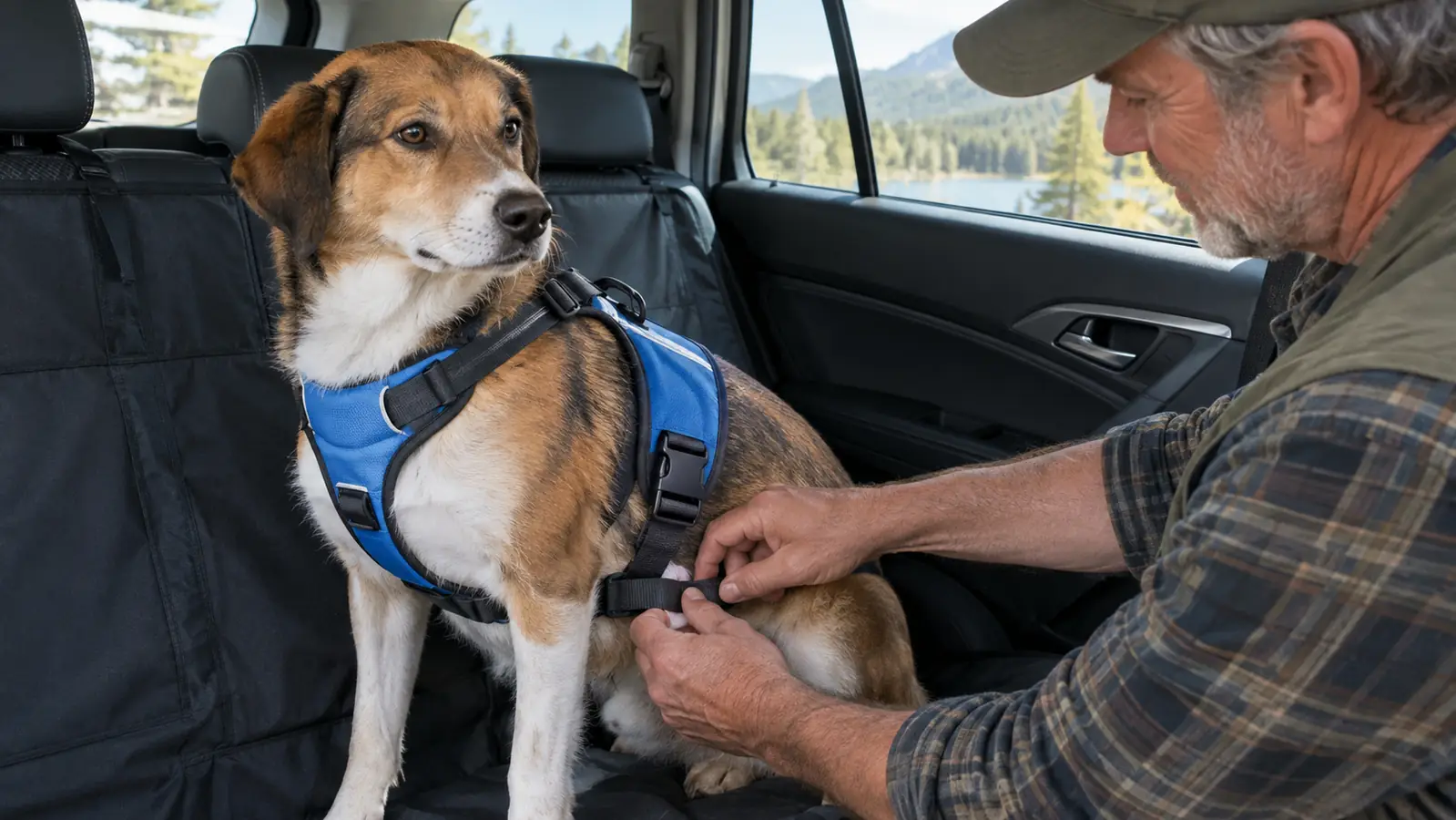
Kurgo calls this a five-point adjustment harness, and that is accurate. There are adjustments at the chest, behind the front legs, along the belly, and at the top of the back. When it fits, it stays put. When it does not fit, you know within the first mile.
Maple wears a medium. Her chest measurement put her right at the edge of the size chart, and I almost ordered a large. I am glad I did not. The medium, adjusted all the way out, gives her full range of motion without letting the harness twist. The sizing chart is honest, but only if you measure carefully. Use a soft tape measure around the widest part of the chest, not over the fur, and check it twice.
Here is what nobody tells you: the fit changes as the padding settles. A new Tru-Fit feels snug in the store and a little loose after a few weeks. The chest pad softens and molds, and the straps stretch just enough that you need to re-tighten. I now do a quick fit check before every drive. It takes thirty seconds and it makes the difference between a harness that works and one that rubs.
Straps, Buckles and the Five-Point System
The straps are the part people ask me about most. They are thick, flat webbing with a secure buckle at the chest. The buckle is easier to open than some I have tested, which matters when Maple is wiggling and I am standing on a rainy trailhead. It clicks closed with a solid sound, and I have never had it pop open on its own.
The adjustments are the tradeoff. Five points means five places to check, and some of them are awkward to reach. The belly strap, in particular, requires me to reach underneath her. Maple is patient, but if your dog is not, you will want to practice the routine at home before you need it in a parking lot.
Once it is on, the harness stays where you put it. I have not had the chest pad slide up into her throat, which has happened with two other harnesses we tried. The padding is wide enough to spread pressure, and the front D-ring sits low enough that the seat belt tether does not pull at her neck.
What Nobody Tells You Before You Buy
First, the harness does not do the work by itself. You still have to route the seat belt through the correct path, buckle it, and tighten the tether so the dog can stand and lie down but cannot reach the front seat. I have seen photos of this harness installed wrong, and the wrong install gives you almost no benefit.
Second, there is a break-in period. The first two or three trips, Maple seemed stiff in it. She would stand in the back seat and stare at me as if I had betrayed her. By the fourth trip she stopped noticing it, and now she settles within ten minutes. Give your dog a few short drives before you attempt a six-hour day.
Third, the harness is not a cure for a restless dog. Maple still gets anxious on winding roads. What the Tru-Fit does is keep her in her space while she works through it. She can lie down, sit up, and turn around, but she cannot climb into Ron's lap. That alone has made our trips calmer.
I am also not going to tell you that this harness makes your dog invincible. No harness does. The crash test certification is a good starting point, but the real margin depends on the fit, the tether, and the way you install it in your specific car. Check all three before every trip.
Fourth, the harness can make a nervous dog feel more confined at first. Maple's first reaction was to pull against the tether until she learned her boundaries. That is not a flaw in the harness, but it is something to expect. A few short practice sessions in the driveway helped her understand that she could still lie down and turn around.
How It Holds Up After Six Thousand Miles
After six thousand miles, the webbing still looks good. No fraying, no loose stitching, and the buckle still clicks the way it did on day one. The chest pad has softened, which I expected, and it shows light wear along the edge where it rubs the seat belt. Nothing has failed.
The hardware is the part that impressed me most. The D-rings are welded, not bent wire, and they have not deformed even when Maple leans hard into the tether on a sudden stop. I have had cheap harnesses where the metal starts to bend after a few months. This one has not.
One honest complaint: the harness picks up fur. Maple sheds, and the padding acts like a magnet. I brush it off before it goes in the washing machine, and I wash it on gentle in a mesh bag. It comes out clean and dries fast, but it is not a set-and-forget piece of gear.
One small detail I noticed around mile four thousand: the stitching around the chest D-ring is still tight. That is the point where cheaper harnesses start to pull apart. I check it before every wash, and so far there is nothing to report. That is exactly the kind of boring news you want from a piece of safety gear.
The Seat Belt Routine That Works for Us
We have a routine now. Before every drive, I check the fit, route the seat belt through the correct path, and clip the tether. Ron does a second check because two sets of eyes are better than one. It sounds fussy, but it takes less than a minute and it has kept Maple safe and calm on every trip we have taken.
The tether we use with the Kurgo is short enough that Maple can stand, turn, and lie down, but not long enough to reach the front seat. That length is the sweet spot. Too long and she has too much room to wander. Too short and she fights it. If you are buying a tether separately, measure your back seat first.
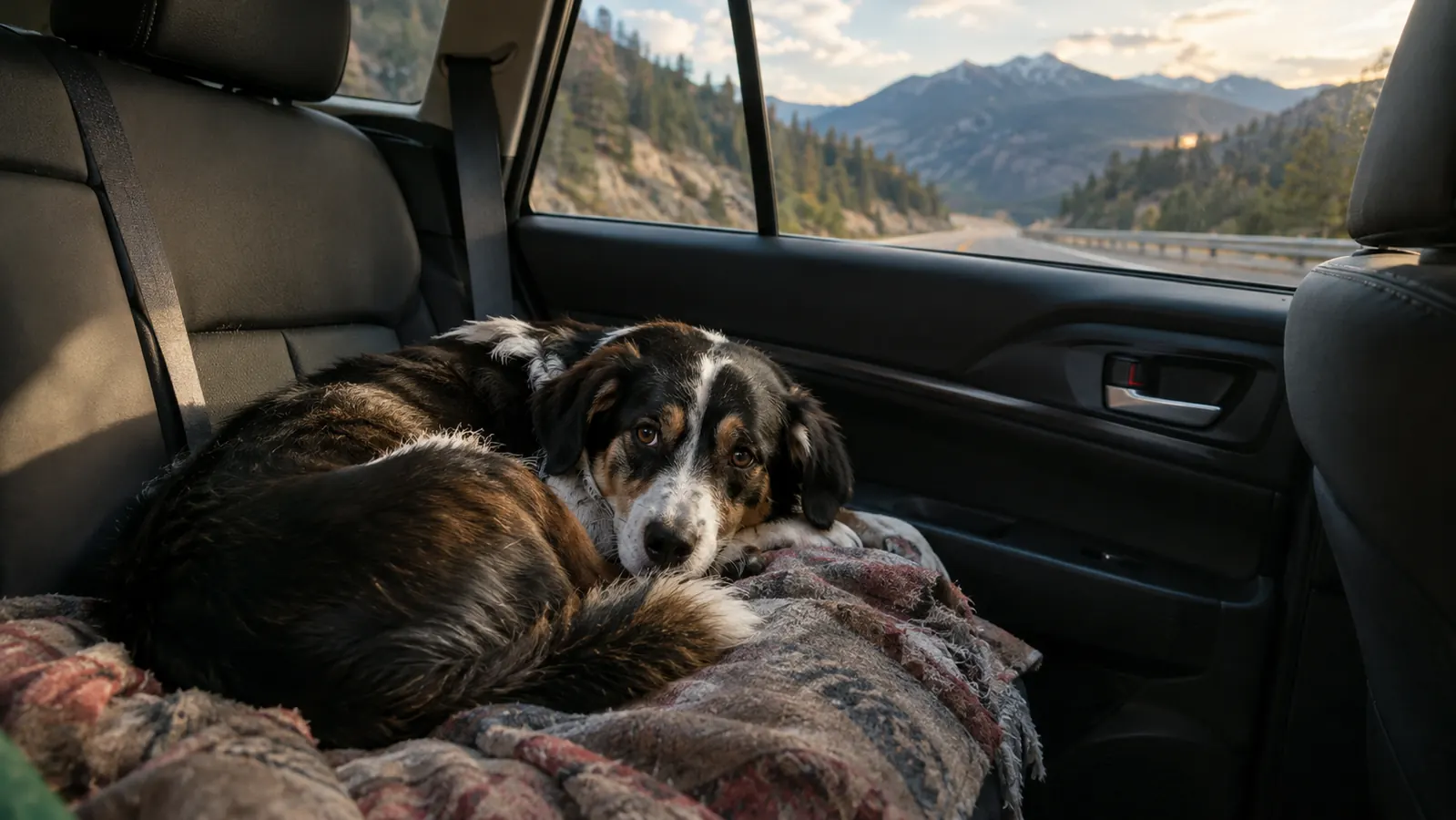
One detail that surprised me: the harness works better when Maple has a familiar blanket under her. The padding is comfortable, but the blanket gives her a place to associate with rest. She settles faster with it, and a settled dog is a safer passenger. That is the kind of thing you only learn after a few long trips.
The Tether Question
The Tru-Fit is sold as a harness, and the tether is a separate piece. I recommend buying the matching tether or measuring your car carefully. The tether length changes everything. With the right length, Maple can lie down and stretch. With the wrong length, she is either too free or too cramped.
I use the tether clipped to the seat belt path, not the LATCH anchors. That keeps the harness low and steady. Read the instructions that come with your car before you choose. Every car is a little different, and the difference matters on a hard stop.
How It Compares to What We Tried Before
Before the Kurgo, Maple rode in a simple step-in harness we bought at a big box store. It was fine for walks, but in the car it slid sideways on every turn. I spent more time adjusting it than watching the road. The Tru-Fit is heavier and more structured, and it does not slide. That difference is the whole reason we kept it.
We also tried a cheap vest-style harness that buckled around the middle. Maple hated it, and I did not blame her. The buckles pressed into her ribs and the material did not breathe. The Kurgo is not perfect, but it is the first harness she has worn for a full day without complaining.
What I Would Change
If I could redesign one thing, it would be the belly strap. It works, but it is the hardest part to adjust, and I have to reach under Maple every time. A quick-release clip on the belly strap would make it easier to put on and take off. That is my biggest gripe.
I would also add a small loop near the chest D-ring to hold the excess strap. The loose ends tuck into the elastic keepers, which helps, but they still work loose after a few trips. It is a small thing. It does not affect safety, and it does not stop me from recommending the harness.
Cleaning and Care
Cleaning is easy if you do it on a schedule. I remove the harness once a month, brush off the fur, and wash it in a mesh bag on the gentle cycle. It air dries overnight. The padding holds its shape, and the straps do not shrink or twist. I have washed it maybe eight times now, and it still looks close to new.
Sizing Notes From the Road
Kurgo's size chart asks for the dog's weight and chest girth. I found the girth number more useful. Maple's chest is twenty-five inches, which put her at the top of the medium range. The medium fits her with room to spare. If your dog has a deep chest like hers, trust the girth measurement over the weight.
One warning: the Tru-Fit runs long through the body. On a short-backed dog, the belly strap may sit too far back. If you have a long-bodied dog, this is the harness for you. If your dog is built like a barrel on short legs, measure the body length before you order.
Also factor in the dog's coat. Maple has a thick double coat, so I measured her in the spring after she shed her winter coat. If I had measured her in January, the medium might have felt tight. Measure your dog at the time of year you travel most.
Final Thoughts
After a year with the Kurgo Tru-Fit, I would buy it again. It is not the easiest harness to put on, and it asks for more attention than most. But it does the thing it promises: it keeps my restless dog in her seat, comfortably, for six thousand miles and counting.
If you are on the fence, start with a short drive and a patient afternoon. Measure your dog, watch the fitting video, and give both of you time to get used to it. The Tru-Fit is a tool, not a fix, and used the right way it has made our trips better. That is the honest version.
What I Liked
- Thick, flat webbing and welded D-rings that show no wear after six thousand miles
- Five-point adjustment lets you dial in the fit for a deep-chested dog
- Padded chest spreads pressure and stays put on turns
- Secure buckle that is easy to open, even with a wiggly dog
- Washes clean in a mesh bag and air dries overnight
Where It Falls Short
- Five adjustment points means a longer get-ready routine
- Belly strap is awkward to reach and adjust
- Padding collects fur and needs regular brushing
- Fit changes as the padding settles, so you have to re-tighten
- Not a fix for dogs who are anxious in the car
The Tru-Fit does not fix a restless dog. It keeps her in her space while she works through it, and that is enough.
Who This Is For
If you drive with your dog more than once a month, if your dog rides in the back seat of a car, and if you are willing to spend ten minutes getting the fit right, the Kurgo Tru-Fit is worth a close look. It is built for travel, not for walks around the block. On a dog who settles easily, it is nearly invisible. On a dog like Maple, it gives both of us a calmer ride.
You do not need to be a gear person to use it. The instructions are clear, and Kurgo has fitting videos that walk you through each strap. I am not handy, and I managed the whole thing in one afternoon. If you are the kind of person who reads the manual before assembling furniture, you will be fine.
One more thing in its favor: the Tru-Fit works with the seat belt in our Outback without any extra adapters. That is not true of every harness we have tried. If you drive a different car, test the fit before you rely on it. The harness is only as good as the installation.
Who Should Skip It
If your dog hates having things over their head, this harness may be a battle. The Tru-Fit goes on over the head, then clips at the chest, and some dogs object to that. Maple tolerates it, but I have known dogs who would treat it as a personal insult. Try the harness on in the living room before you need it in a parking lot.
If your dog is between sizes, think carefully. A too-big Tru-Fit will twist and slide, and a too-small one will rub. Measure twice and, if you are between, I would size down and use the adjustments. Also, if you only need a harness for quick walks, there are simpler options. This one earns its keep on long drives, not on the sidewalk.
And if you only take your dog to the vet and back, you may not need this level of structure. A simpler harness is easier to live with. The Tru-Fit is for people who spend real hours on the road and want the dog to be as safe and comfortable as the humans.
After a year on the road, this is the one I would buy again
After six thousand miles, this is the harness I would buy again. If your dog rides in the car as much as Maple does, check today's price on Amazon and see if the fit works for you.
Amazon See Today's Price on Amazon →